
Happy New Cycle
A change in the calendar is approaching, and with it comes that inevitable reflection on our lives, our work, and our successes and failures.
Although a
The short days and the cold invite that “photosynthetic hiatus” that fills the forest with silence and reflection. Some plants have already scattered their seeds and have only death left to face, with the secret satisfaction of having fulfilled their role. Other trees have finally managed to reach the canopy and stand majestically, knowing they have conquered a summit that belongs only to the group and never to the individual; countless fallen leaves fuel the dance of life and death that should continuously govern our precious soil.
Being able to connect with these cycles and their constant need for something to die in order to allow life to flourish helps us design our own regenerative projects.
Life Cycles in a System
A project, like an ecosystem, requires the same roles in order to be created and developed.
There are ideas that are pioneering and bring with them great energy and abundance; they grow with very little and draw sustenance from their own essence, leaving behind great fertility that other ideas or people can use to take root, thus allowing the natural cycle to continue.
One of the design principles of permaculture is to facilitate and accelerate natural succession. Designing a project means finding a purpose and identifying which elements need to interact in order to achieve that purpose.
The path to achieving that Meta-Goal is the very path of Life itself, with successive processes and stages of reaction and transformation.
A well-designed Regenerative Project is one that regenerates itself and its environment by planning a succession of plantings. It meets the project’s needs using existing resources, while always paying attention to limiting factors in order to increase development capacity.
Celebrate
Connecting with the cycles also means celebrating each new phase. Celebration invites us to honor change, cherish what we’ve experienced, and bid farewell to that experience to make way for a new one, which draws on everything we’ve learned from the previous one.
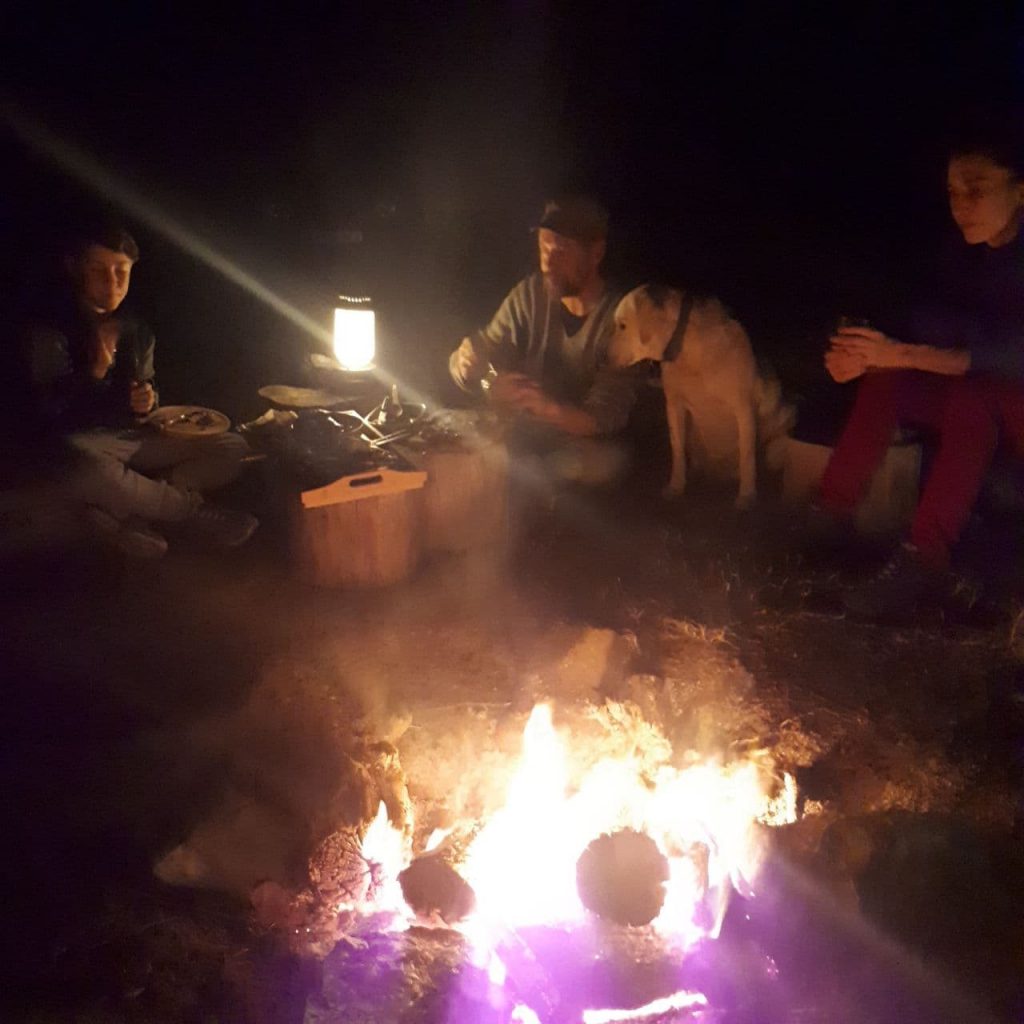
This winter solstice, we have so much to celebrate at La Casa Integral!
It has been a year full of impact—or at least that’s how we feel. Here’s a look at the initiatives we’ve carried out across the three branches of La Casa Integral.
Educational Team: Solutions for the Individual
As the Teaching Team
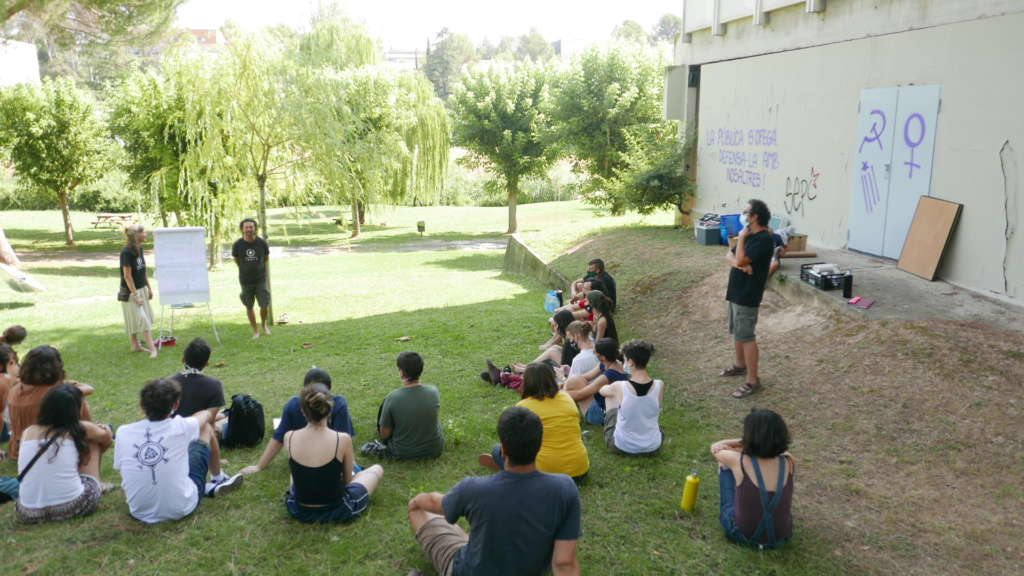
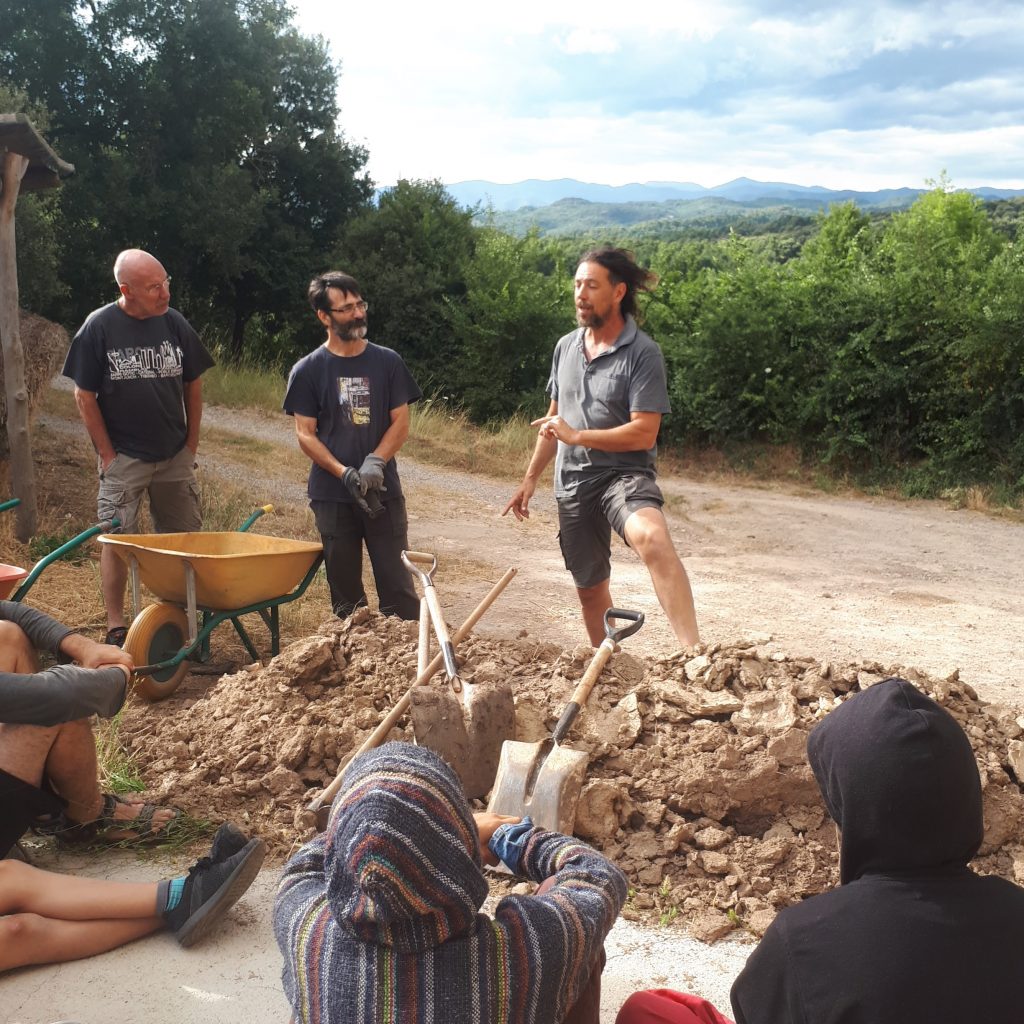
- We have certified 47 people in Permaculture Design through two Permaculture Design Courses (PDCs)—one of which was the PDC for university students, funded by the EU Solidarity Corps— In collaboration with Mas Les Vinyes and Aline, she has also certified 11 participants in the online PDC at the Integral Permaculture Academy, 3 participants in the online PDC offered by the Permaculturists’ Guild—where she serves as a facilitator—and 10 participants in the in-person course at Quinta do Vale, although she facilitated and provided group tutoring remotely → 71 people certified in permaculture design
- Aline has co-certified 1 person who earned a diploma from the Iberian Permaculture Academy and has mentored 4 others → 1 person has earned a diploma in applied permaculture design
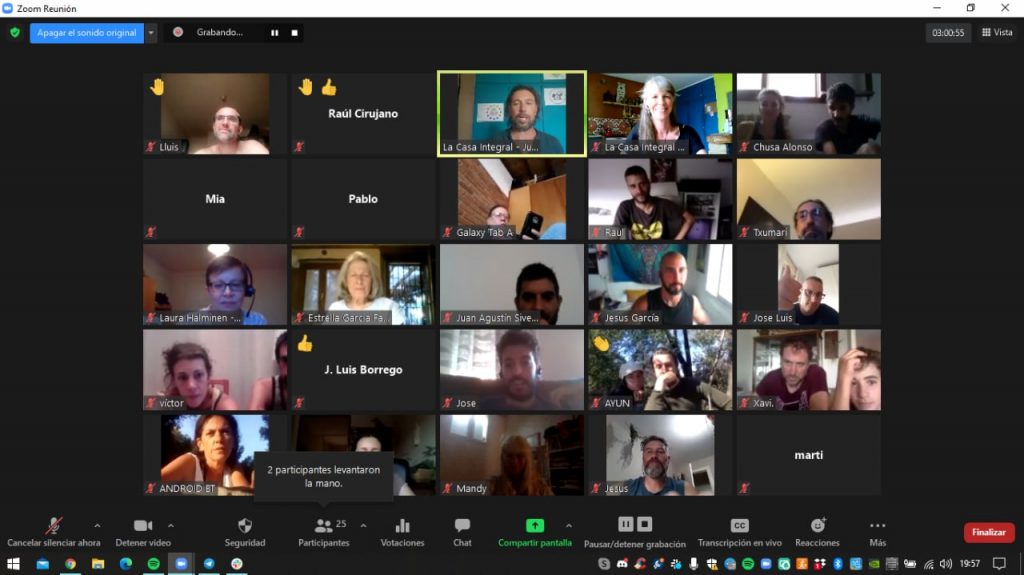
- We have taught two online courses on wastewater for a total of → 43 people
- We were able to hold two in-person workshops for projects that wanted to install a wastewater reuse system, with a total of → 24 participants
- We conducted a training session on water management in rural areas in Extremadura, funded by a European Union project, for a total of → 12 people
- Anna Gurney from Boodaville invited us to co-facilitate an Erasmus+ training session with her in Sanillés, a beautiful place in La Cerdanya, where we were able to“Live the Questions” with 20 people who work with young people from all over Europe.
- The PermaMed association is collaborating on an Erasmus+ project, Gaia YES!, in which we are developing a curriculum for Education for Sustainable Development, based on the Gaia Education curriculum for secondary school students, and a guide for educators to support the implementation of the curriculum. The completed manuals will be presented in May 2022.
- Speaking of Gaia Education, Aline co-facilitated the Ecological Dimension in English (online) in early 2021, with about 90 registered participants. The 2022 session will begin shortly, and she may also be available for the Spanish-language version, which starts in April 2022—depending on the number of registered participants.
Design Studio: Housing Solutions
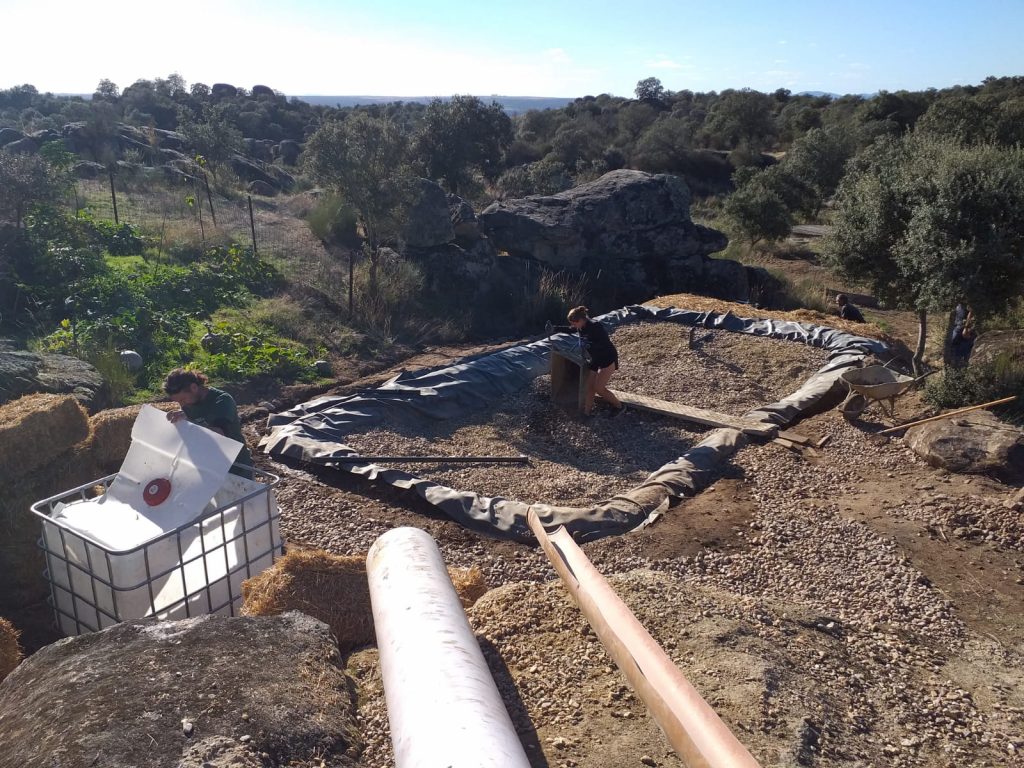
The design studio has experienced significant growth, and we are proud to have designed these projects and brought several of them to life:
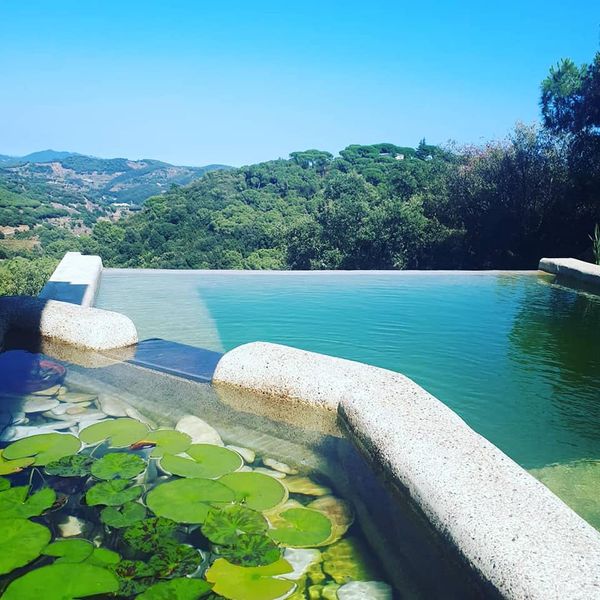
- SIRAR + Natural Pool in Arenys de Munt (BCN) (watch the video here)
- SIRAR Muntanyola (BCN)
- Residential Hydrological Design for a Home in Colmenar del Arroyo (Madrid)
- SIRAR Bigues i Riells (BCN)
- Residential Hydrological Design with a Pool in Bellaterra (BCN)
- SIRAR in Sant Iscle de Vallalta (BCN)
- Consulting + Design for Torre Escribana (Zaragoza)
- Domestic Hydrological Design for a Rural Home in Cantabria
- Residential Hydrological Design for a Farmhouse in Ódena (BCN)
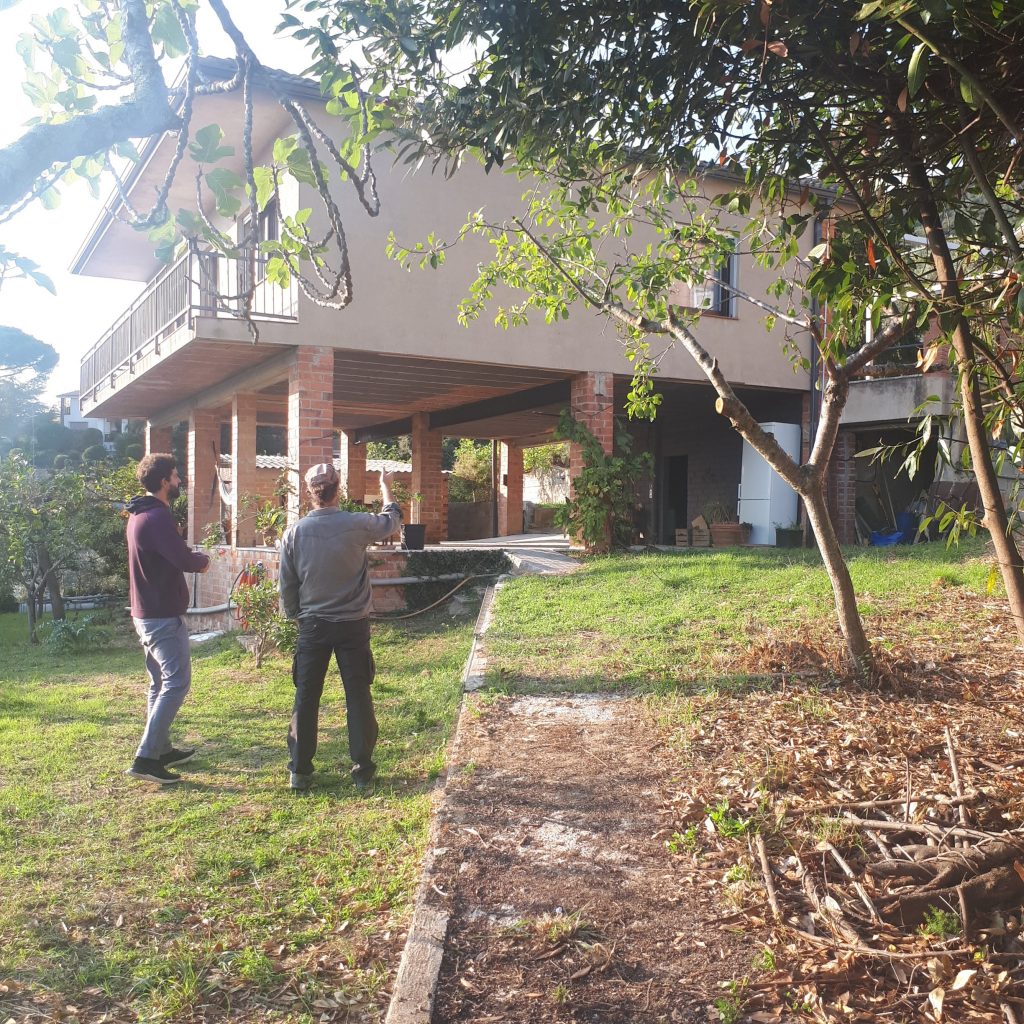
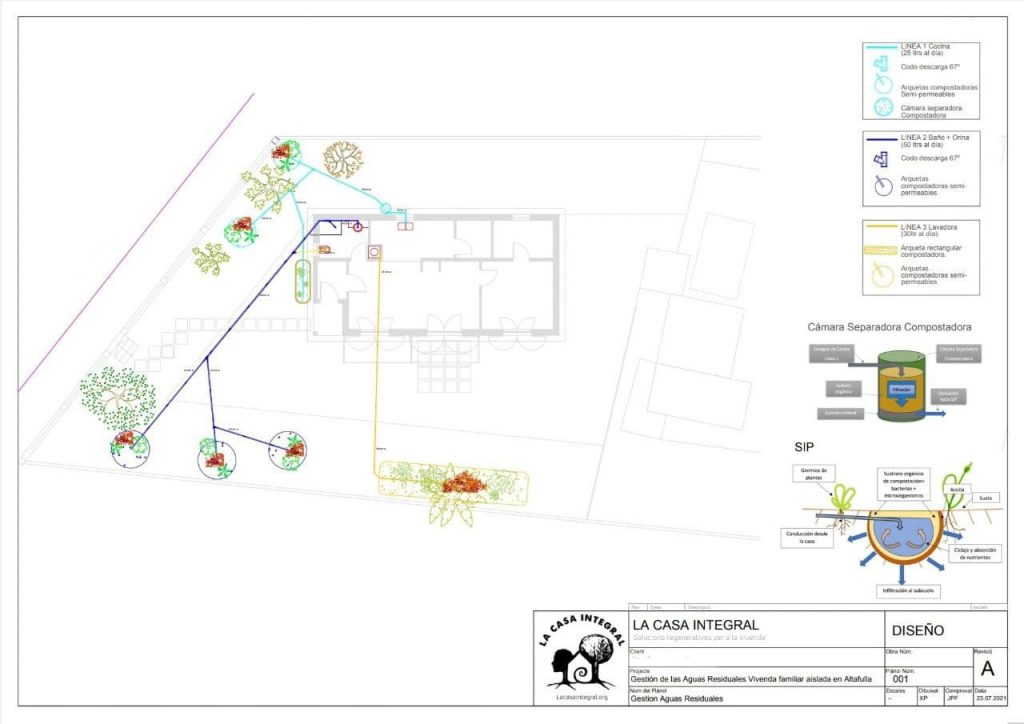
- Design of a SIRAR and SIP for a Home in Altafulla (Tarragona)
- Residential Hydrological Design for a Rural Home in Sant Vicenç de Castellet (BCN)
- Residential Hydrological Design for a Housing Cooperative in Sant Joan de Mediona (BCN)
- SIRAR for a municipal shelter in Plasenzuela (Cáceres)
- Conversion of a Conventional Pool into a Natural Pool in Fontrubí (BCN)
- Comprehensive Consulting Services in SABERES for a Single-Family Home in Mataró (BCN)
- Residential Hydrological Design + Natural Pool at a Single-Family Home in Tiana (BCN)
- Comprehensive Consulting Services for SABERES on a Single-Family Home in the Penedés Region (BCN)
- Comprehensive Consulting Services for a Single-Family Home in LLavaneres (BCN)
- Comprehensive Consulting Services for La Fábrica de la Transición (Tarragona)
- Comprehensive consulting services in collaboration with Green Living Projects for a regenerative tourism project in the Pyrenees
Showroom: Solutions for the Community
We’ve put the (physical) Demonstration Center “on hold” this year, as we wait to resolve the property ownership issue so we can devote all the energy it deserves to it, with the necessary guarantees.
We’ve put together a
To make an impact and “demonstrate” what is already being done in our regions as well as in others, we have therefore chosen to focus our efforts on co-organizing these three events:
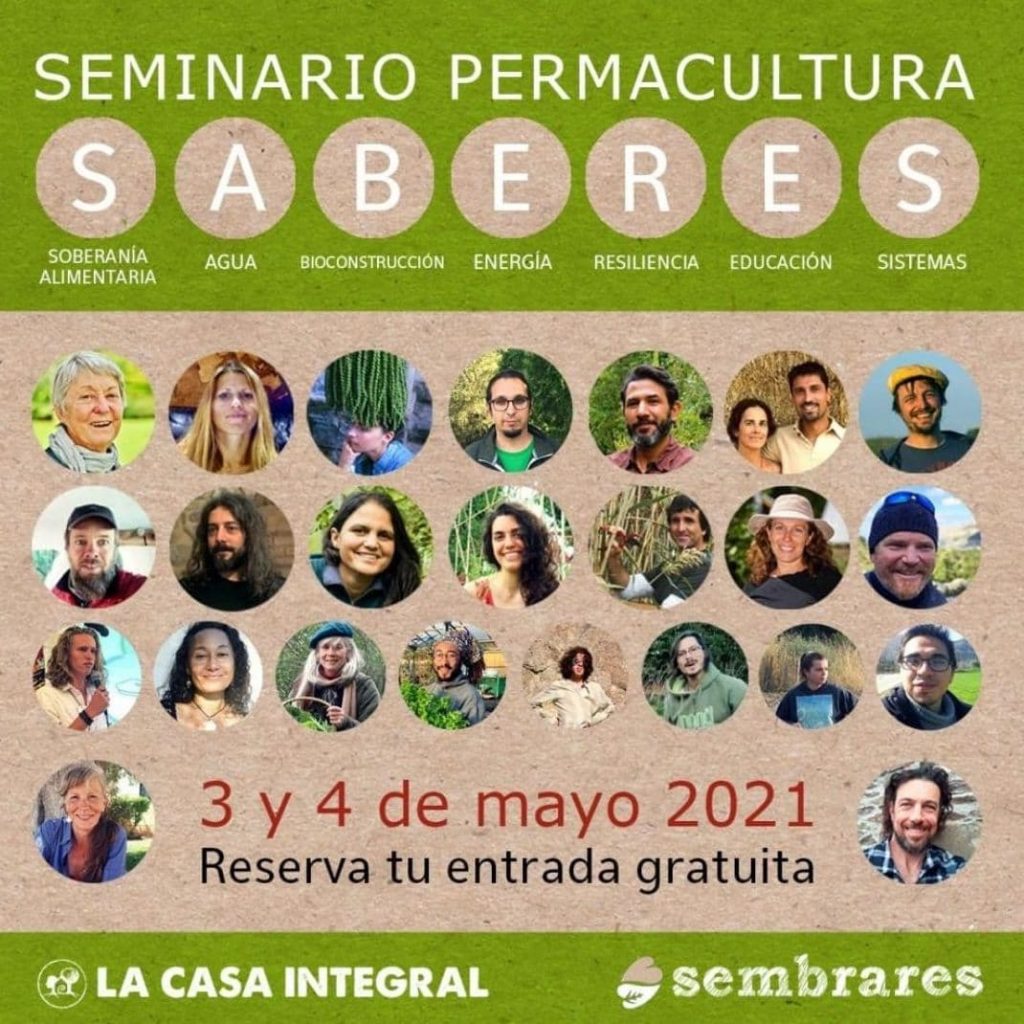
- SABERES Seminar: Through the Sembrares platform, we reached nearly 10,000 people throughout the Spanish-speaking world. This has been one of the most challenging and rewarding projects of the year—designing the content, conducting the interviews (and recording them), translating some of them, learning, and feeling inspired… All in all, it was a truly wonderful experience—one that was also a gift in its own right (free access on International Permaculture Day, May 2, 2021). You can now access the content for a fee of €49 by following the link above.
- We co-organized the in-person summer gathering of the Iberian Permaculture Association of the Northeast Bioregion (BiorNE), which was attended by about 50 people.
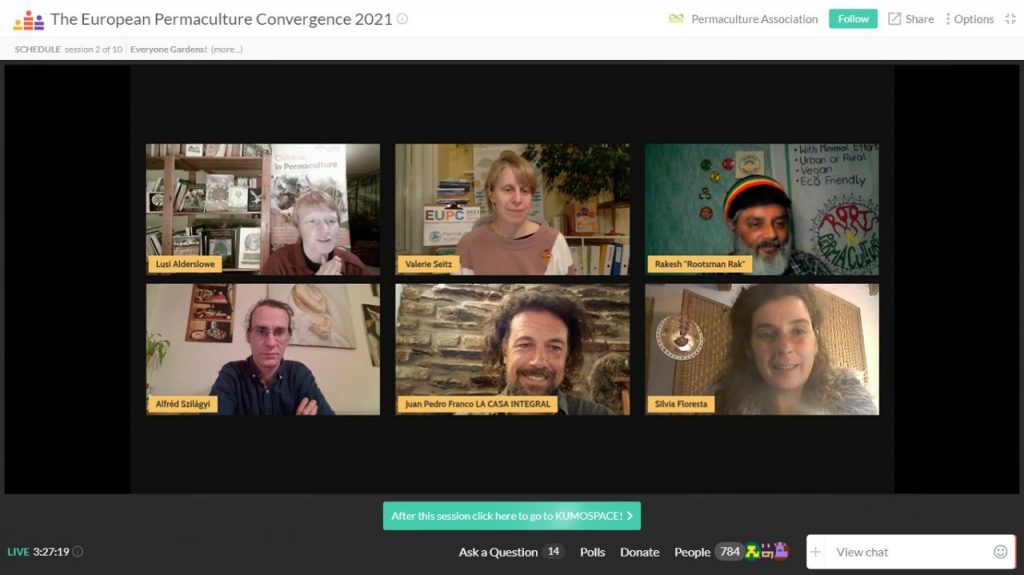
- We helped organize and translate the online EUPC (European Permaculture Convergence), which reached about 1,000 people, and where we also presented a video of our work that garnered some praise and a few laughs (you can watch it above).
In terms of communication, we “show” what we’re passionate about on our new website (the one you’re reading right now), designed by Marta Román of EnRama.
On social media, we’ve reached about
We’ve been invited to appear on various shows and platforms to talk about what we’re passionate about.
For example, we discussed
Think Globally, Act Locally
But there’s no point in going so far away if we don’t practice permaculture at home…
This year, we have become involved with the local organic consumer group in Vallalta, participated in its activities, become a member of the Vallalta Experiences association, and met with the two mayors in our area.
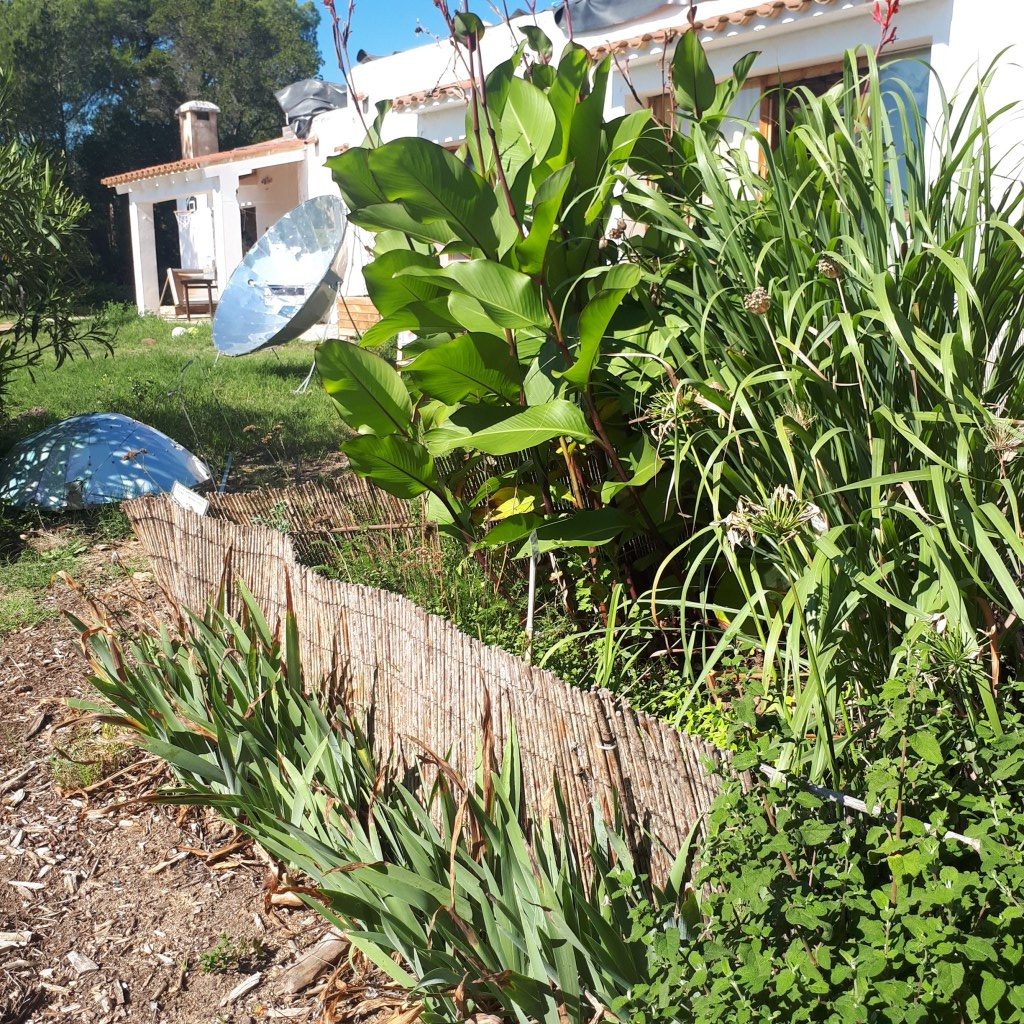
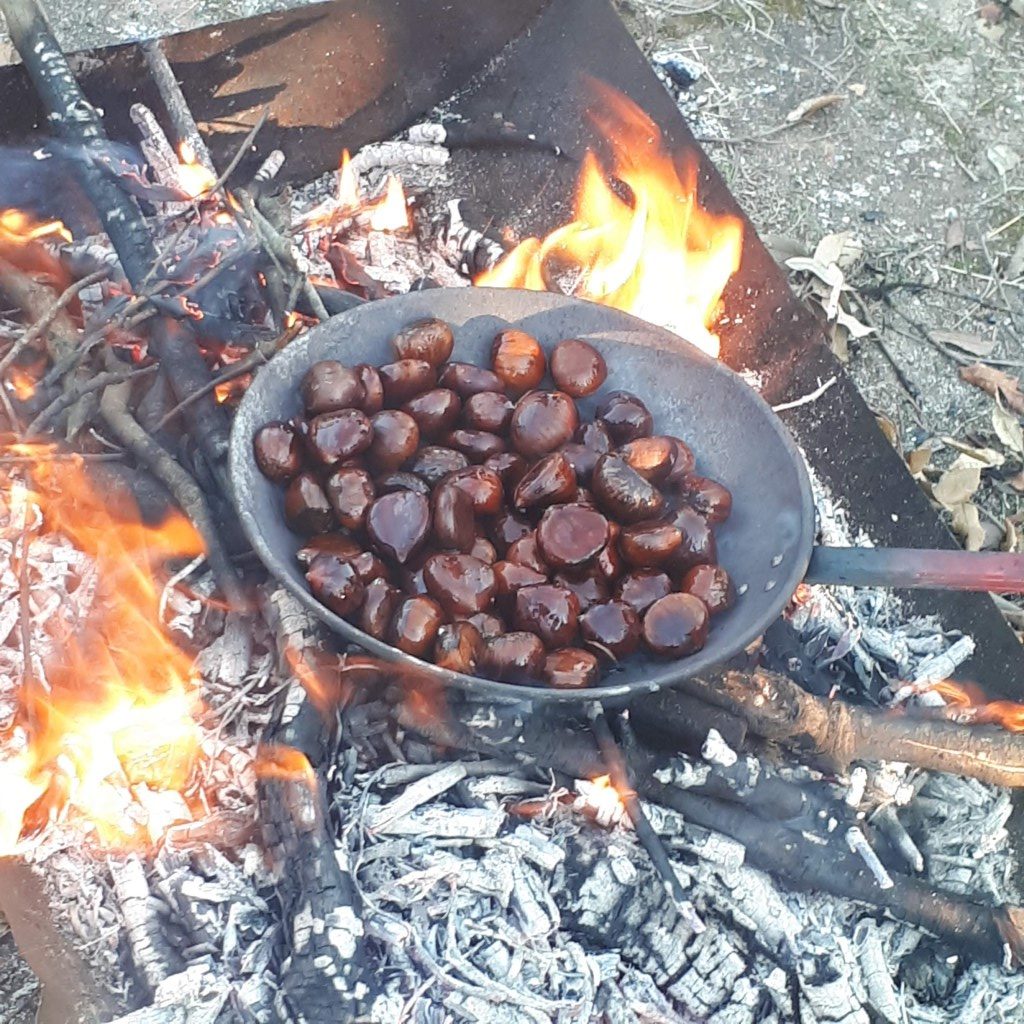
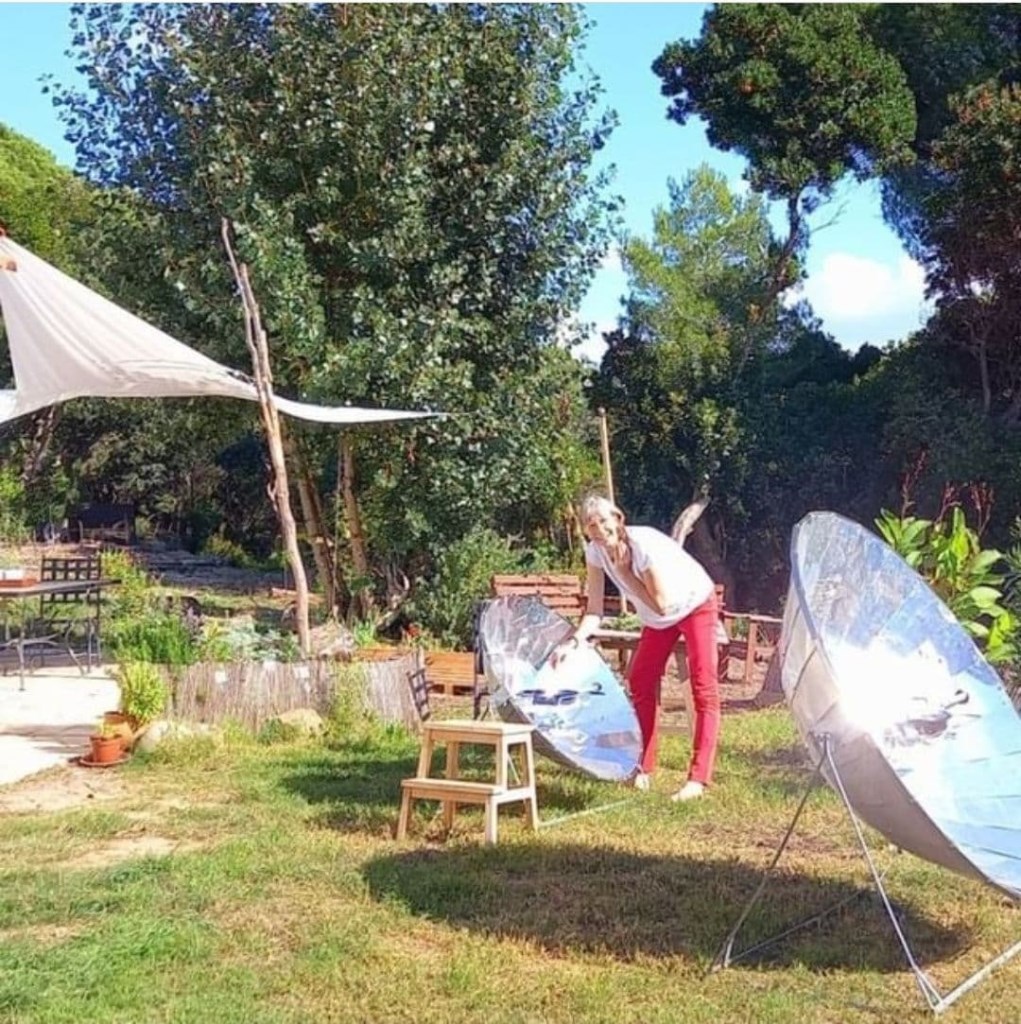
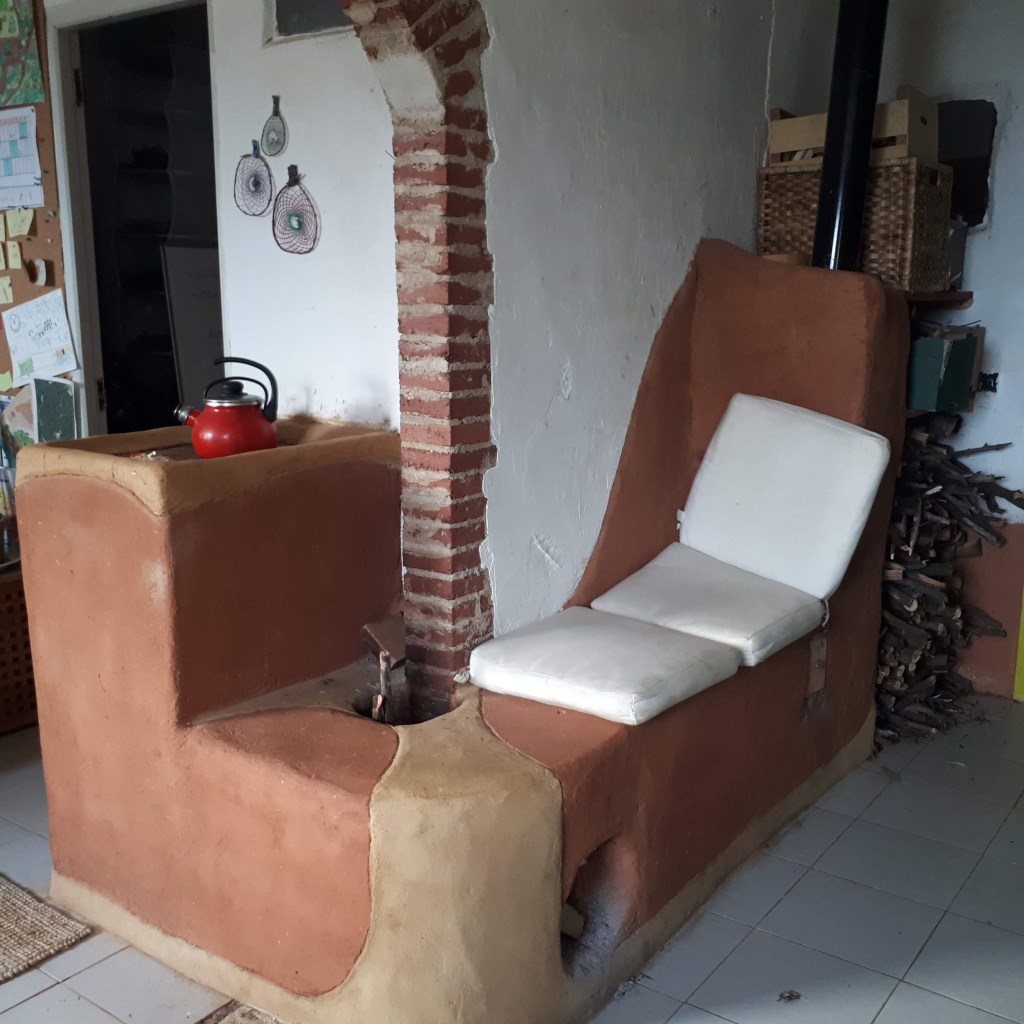
Our solar cookers have been in use almost every sunny day. The woodpile is full of wood we’ve gathered from clearing the forest closest to our house, and our Rocket stove roars on cold days. We continue to adjust our diet, and 90% of what we eat is organic and as locally sourced as possible. We plant and harvest, continuously improving the soil here, which is sandy. We reuse our graywater and compost our human waste, thereby avoiding sewage. We reduce our need for transportation and cultivate healthy habits that bring us happiness.
Now it is our turn to express our deepest gratitude to the people who, directly and indirectly, have made all these experiences possible—people who inspire us, people who trust us, people who criticize us, and people who ignore us.
Every element of a system has a specific role: integrating the marginal, not segregating, and working with the edges. Practicing self-regulation and accepting feedback—in short, all the principles of permaculture help us on this journey.
Now it’s time to remove some of the old growth, prune, and compost to increase fertility so that new seeds can sprout.
Now it is time for the silence of the winter forest, for reflection, and for gathering energy for a new season—which is simply an expression of that Continuum that is Life.
Thank you!
(Registration is now open for our new #SABERES2022 training program —until December 31, 2021—email us at info@lacasaintegral.org)