Regeneration Requires Much More Than Good Intentions (II).
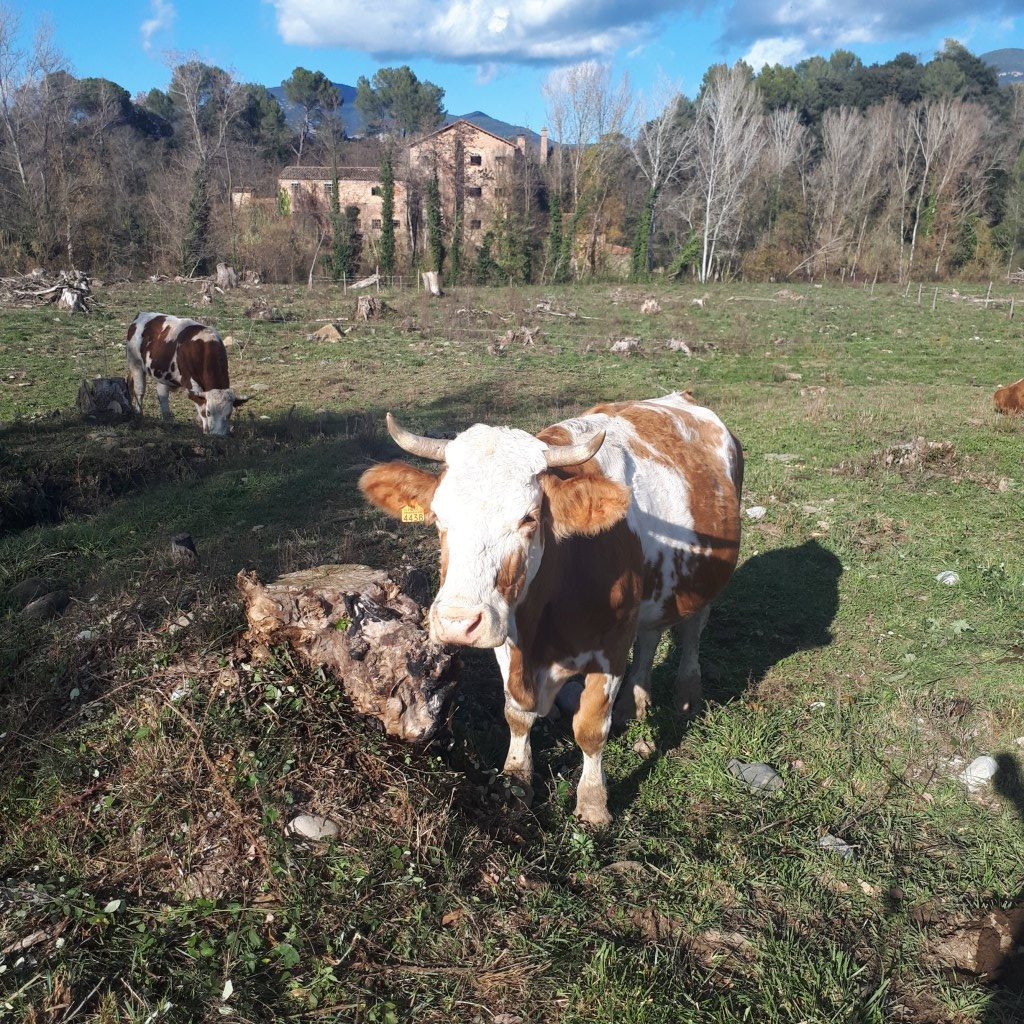
The Cows of Planeses 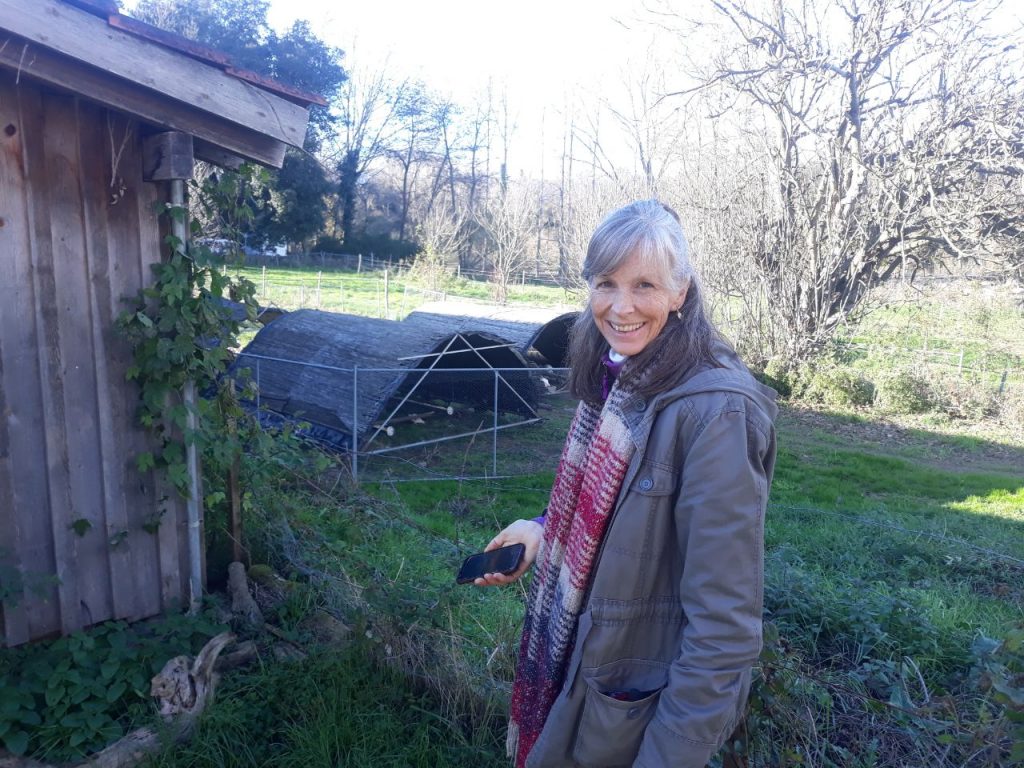
Watching the chickens graze
La Casa Integral is not an agricultural or livestock company; we are not direct food producers, but our vision is to design, share, and implement “regenerative solutions for people, homes, and communities.” To effectively support these processes, we must understand the different realities of the entire ecosystem—from the person who produces, their context, their products, their achievements and obstacles, to the person who sells and markets, the person who legislates, regulates, and certifies, and the person who buys… and, above all, that complex political landscape of resources and the economy, which often ends up bearing the brunt of both the good and bad practices of the aforementioned actors.
On December 2 and 3, we participated in two workshops organized by ARI (Iberian Regenerative Agriculture) and CREAF (Center for Research in Ecology and Forestry Applications).
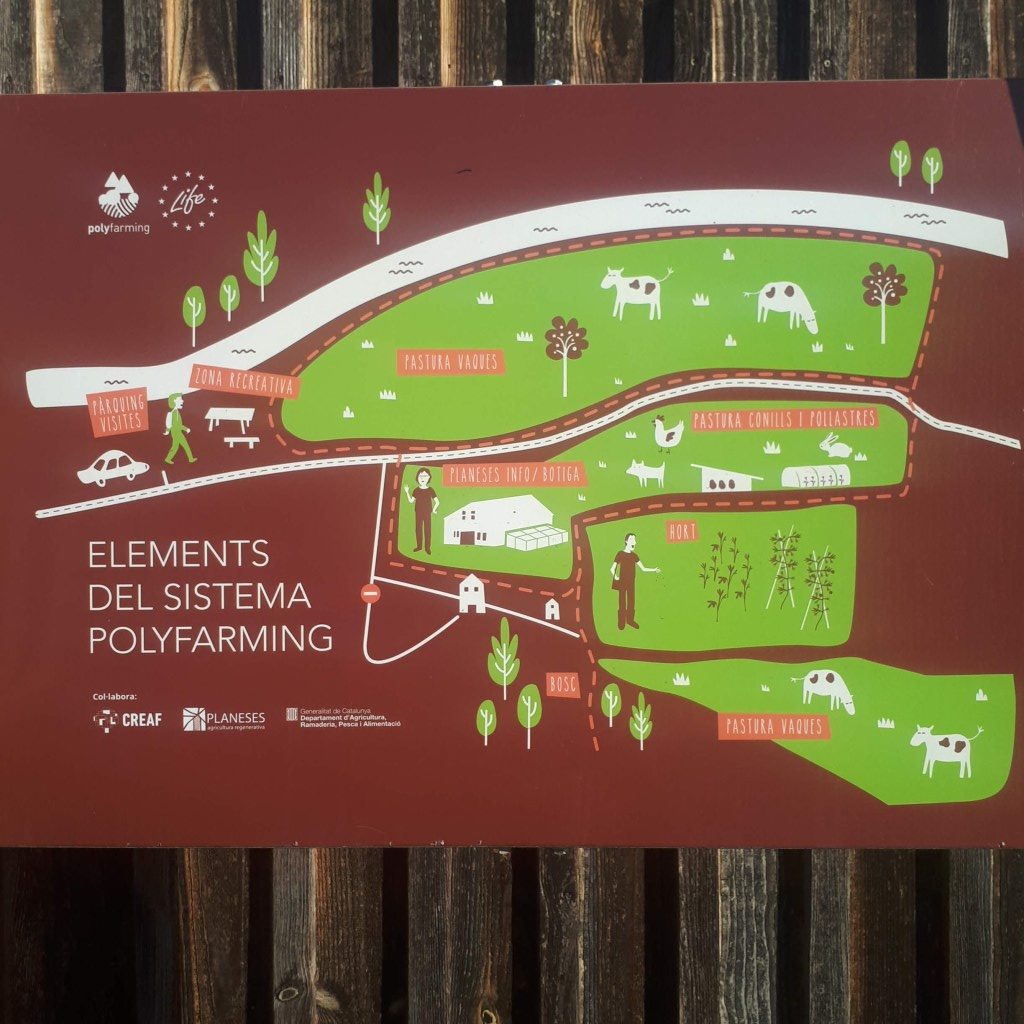
On Thursday, December 2, we visited the
Am I maximizing photosynthetic production on my farm?
How can I improve soil health while maximizing returns?
What are the current or past disturbances that are affecting soil development?
How is the carbon cycle functioning in my system?
How can I improve the water cycle in my system?
These questions guide Planeses in its Holistic Goal, and the results are evident. They have increased organic matter from 1.4% to nearly 6% in less than five years of management, exponentially increasing CO2 and water absorption. These results are almost unthinkable for most agricultural projects, even organic ones.
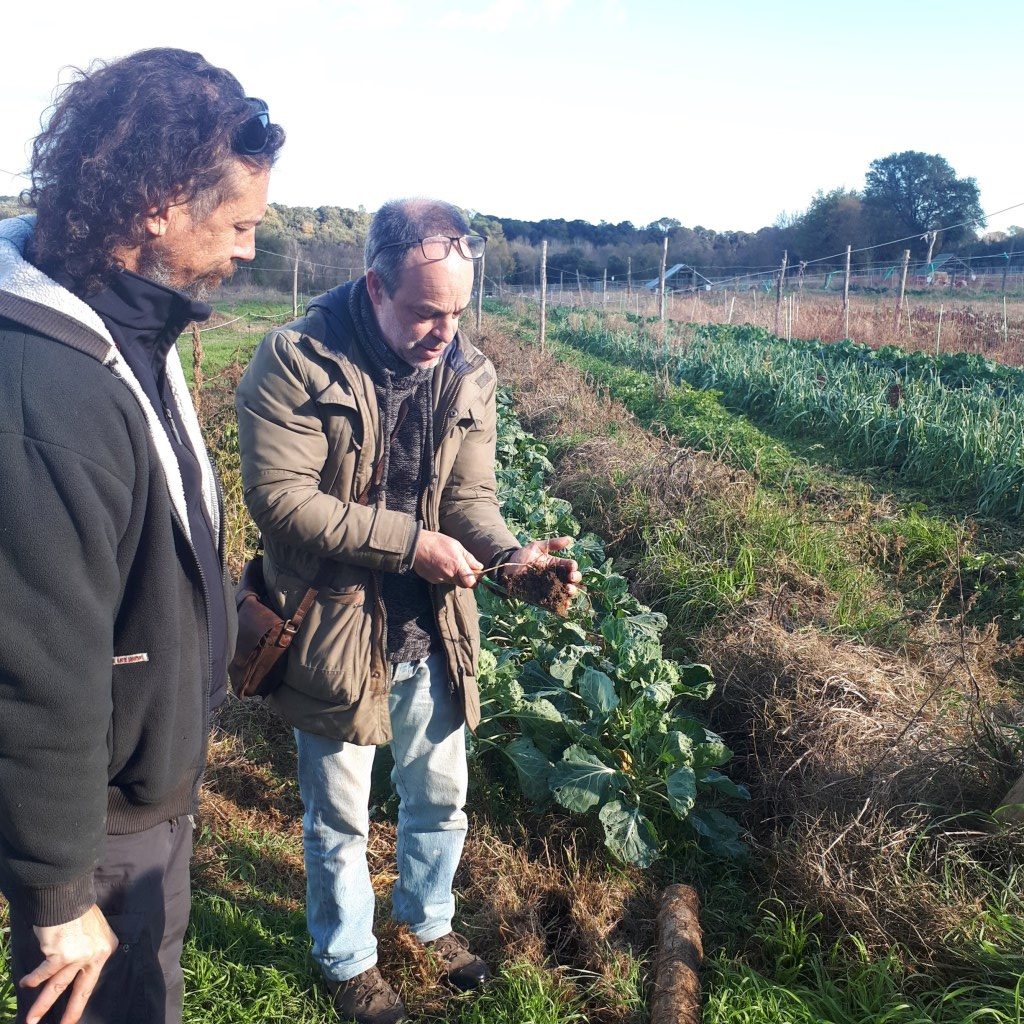
As Ana Digón rightly said in her presentation, “In addition to focusing on increasing the three M’s (Minerals, Microorganisms, and Organic Matter), we must also transform the other two M’s: Management and Mindset.” The perspective from which we approach our production systems is crucial for developing different management strategies.
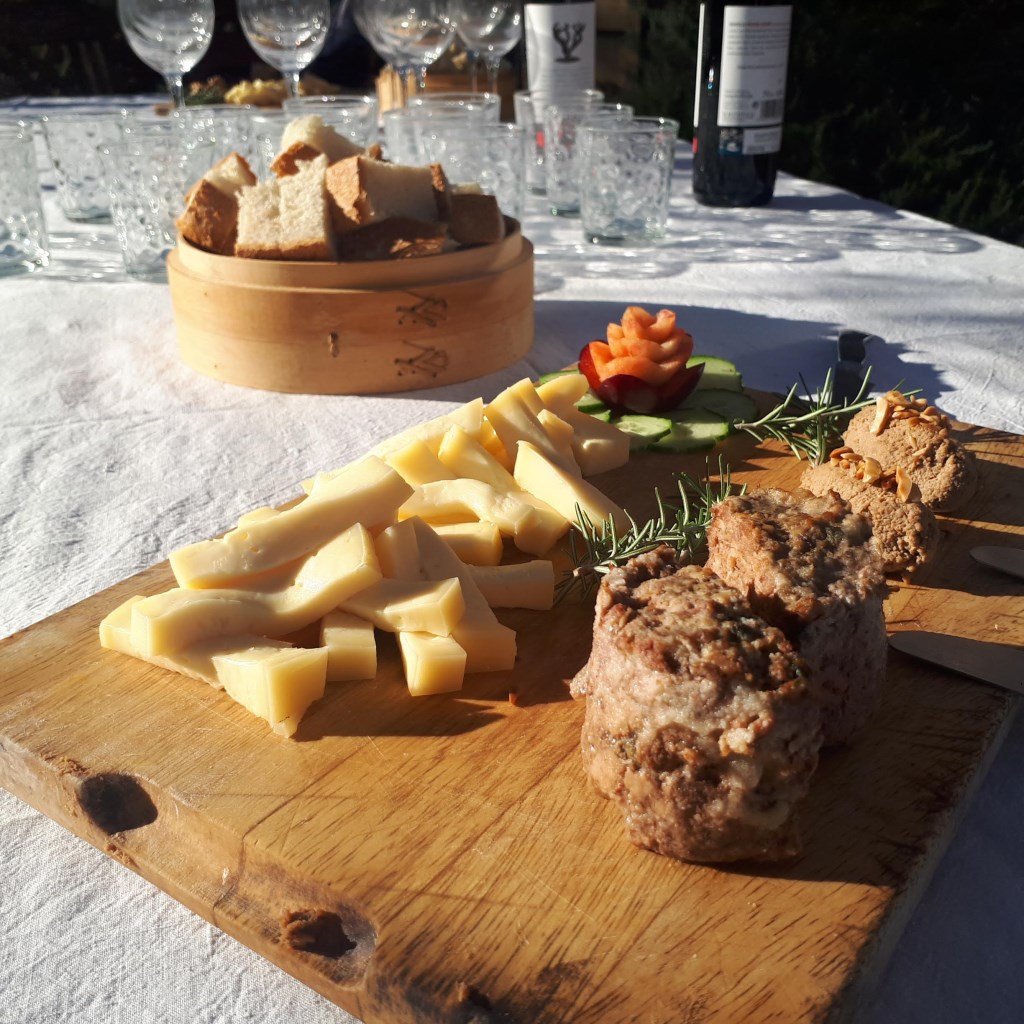
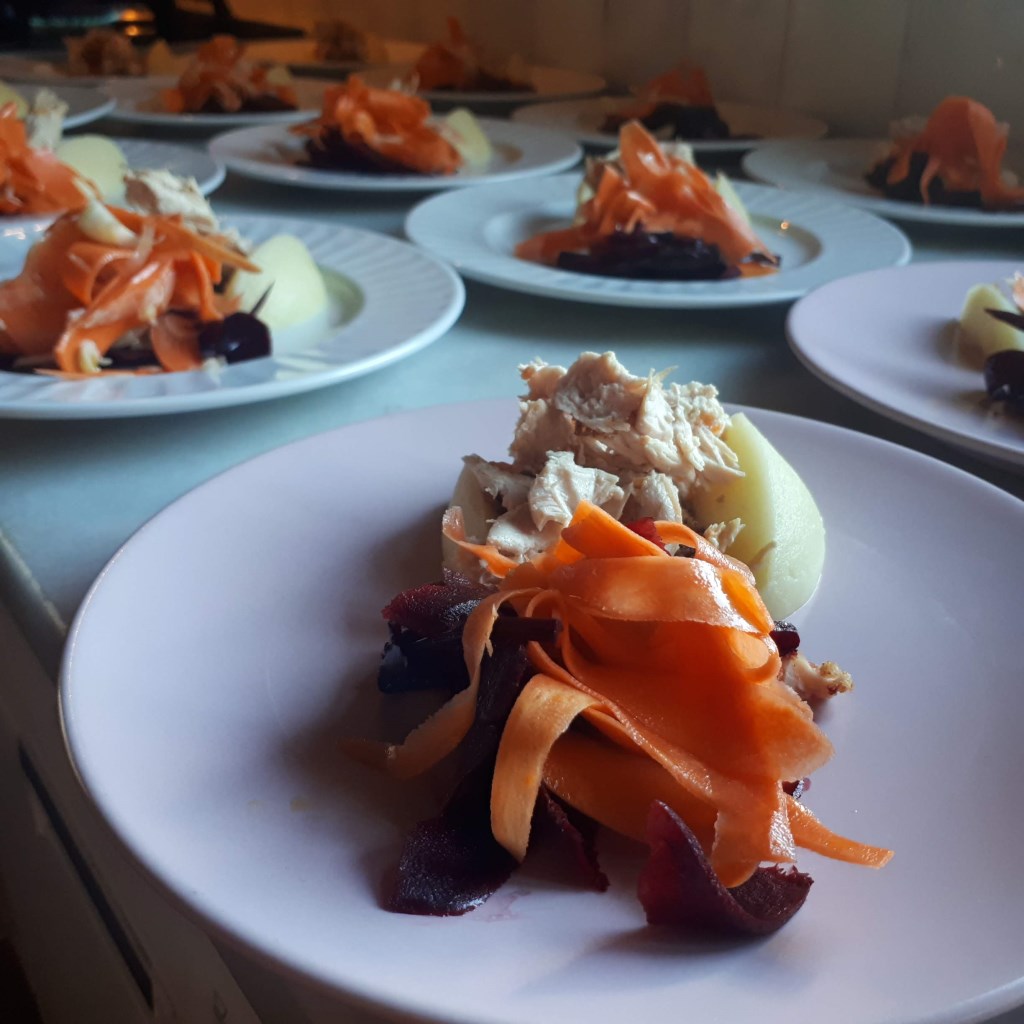
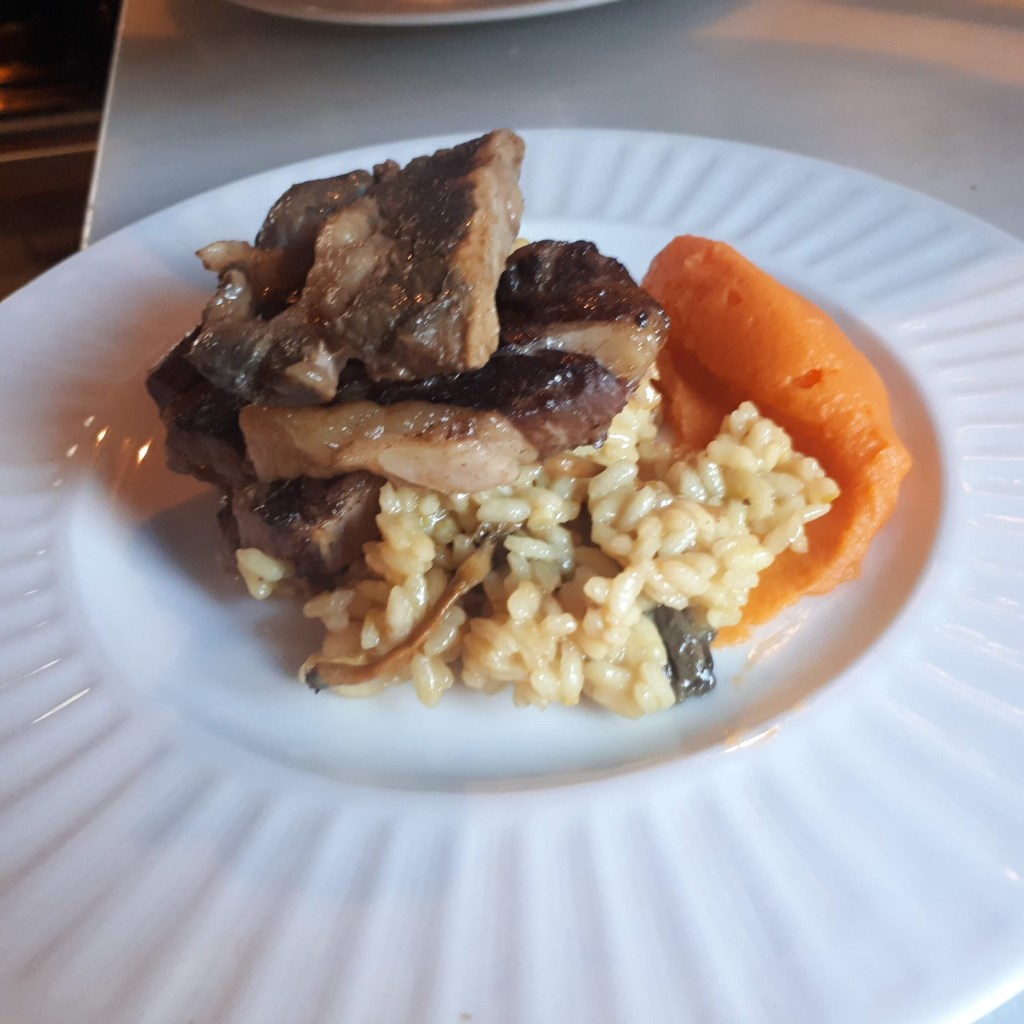
We celebrated Thursday’s visit by enjoying a fantastic meal made with ingredients from the farm and other partner farms, skillfully prepared by Andrés from Cocina Regenerativa.
A 4-year-old ox served in two dishes prepared using two different cooking methods (one as a tartare and the other slow-cooked), accompanied by various vegetables from one of the shops in Planeses, provided the perfect setting to continue sharing this experience with the ranchers, food processors, other visiting farming families such as
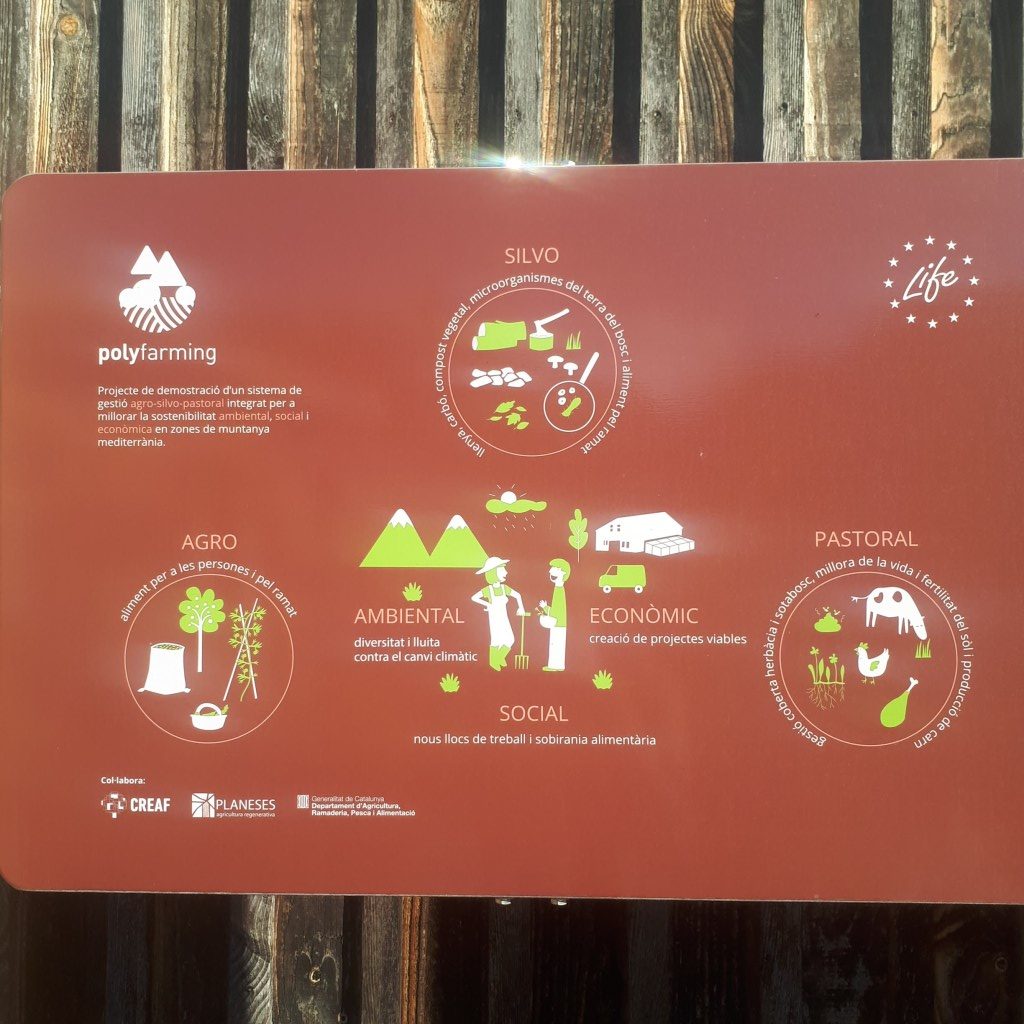
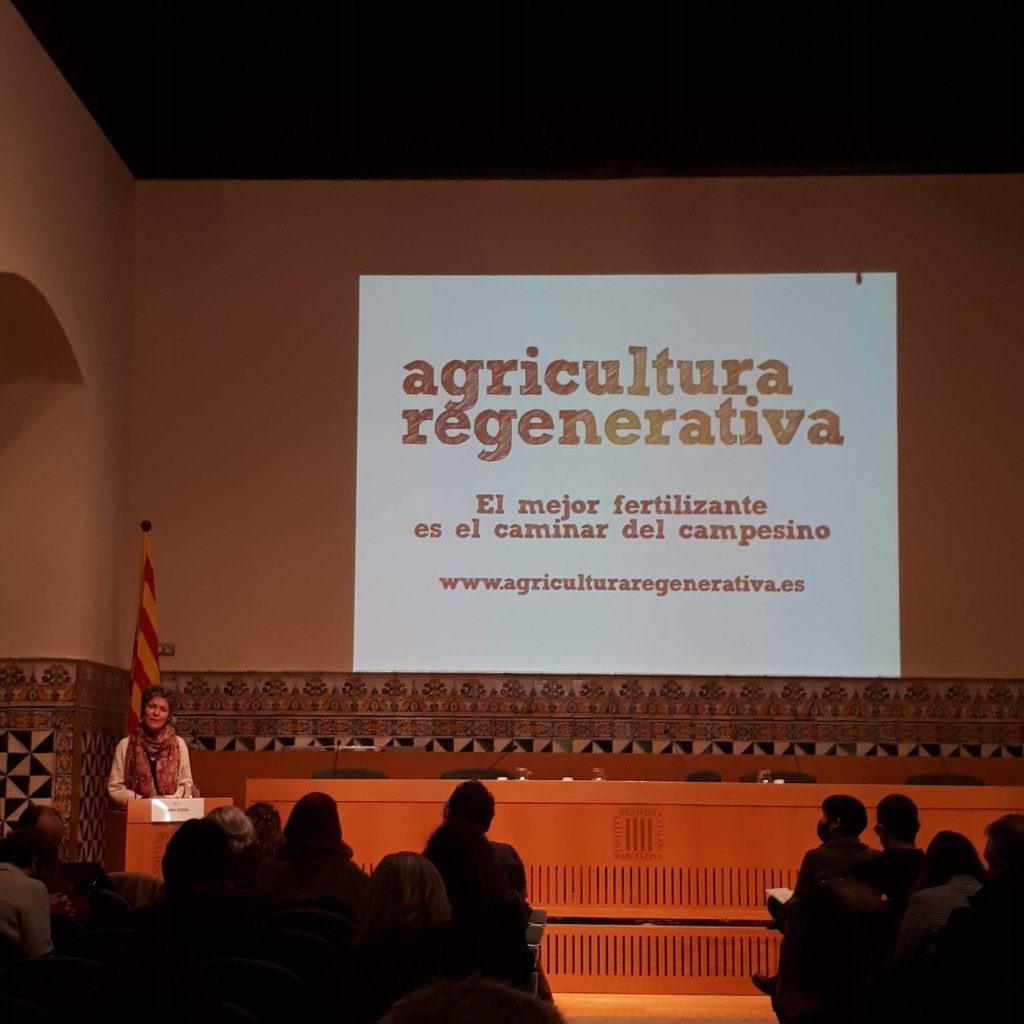
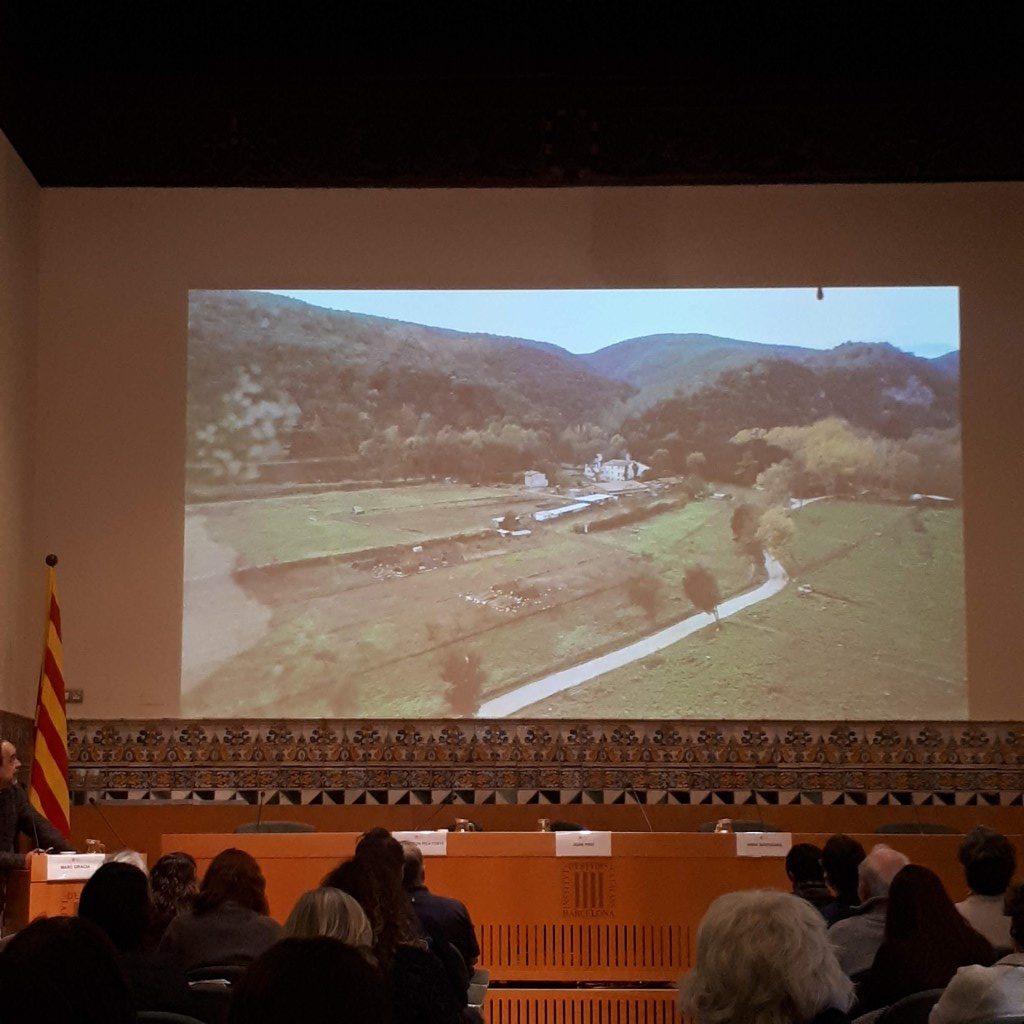
On Friday, the 3rd, at the Institut d’Estudis Catalans, we participated in the presentation of the Life Polyfarming project in Planeses and other presentations on various regenerative agriculture projects, featuring representatives from MITECO, CREAF, ARI, and the Department of Climate Action, Food, and Rural Agenda of the Catalan Government.
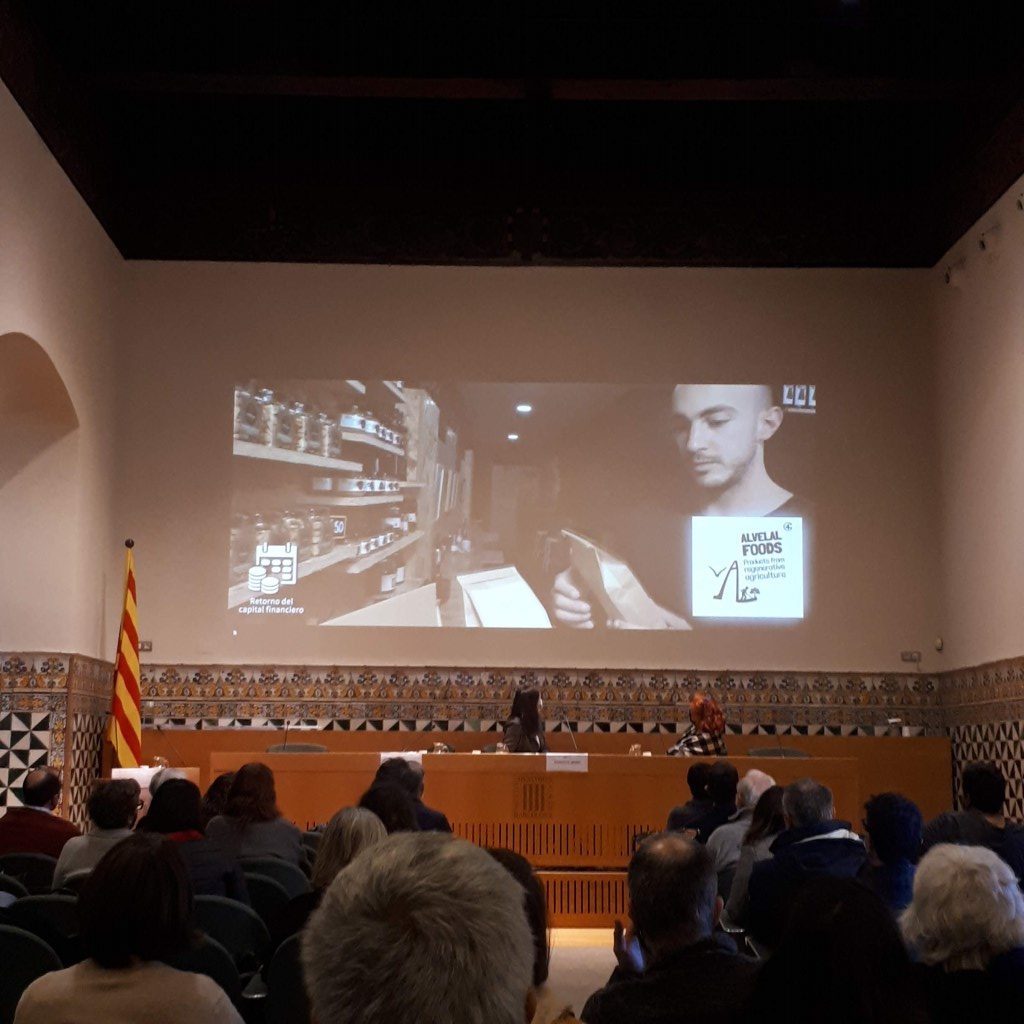
In addition to Planeses, we were treated to a presentation of the AlVelAl project by Remedios and Santiaga, who conveyed with exquisite simplicity and conviction the impact this initiative is having on the southeastern part of the Iberian Peninsula—an inspiration for other semi-arid regions. Their work in connecting the landscape, producers, and consumers is truly exemplary, and the scale of the project (100,000 hectares!) is nothing short of impressive.
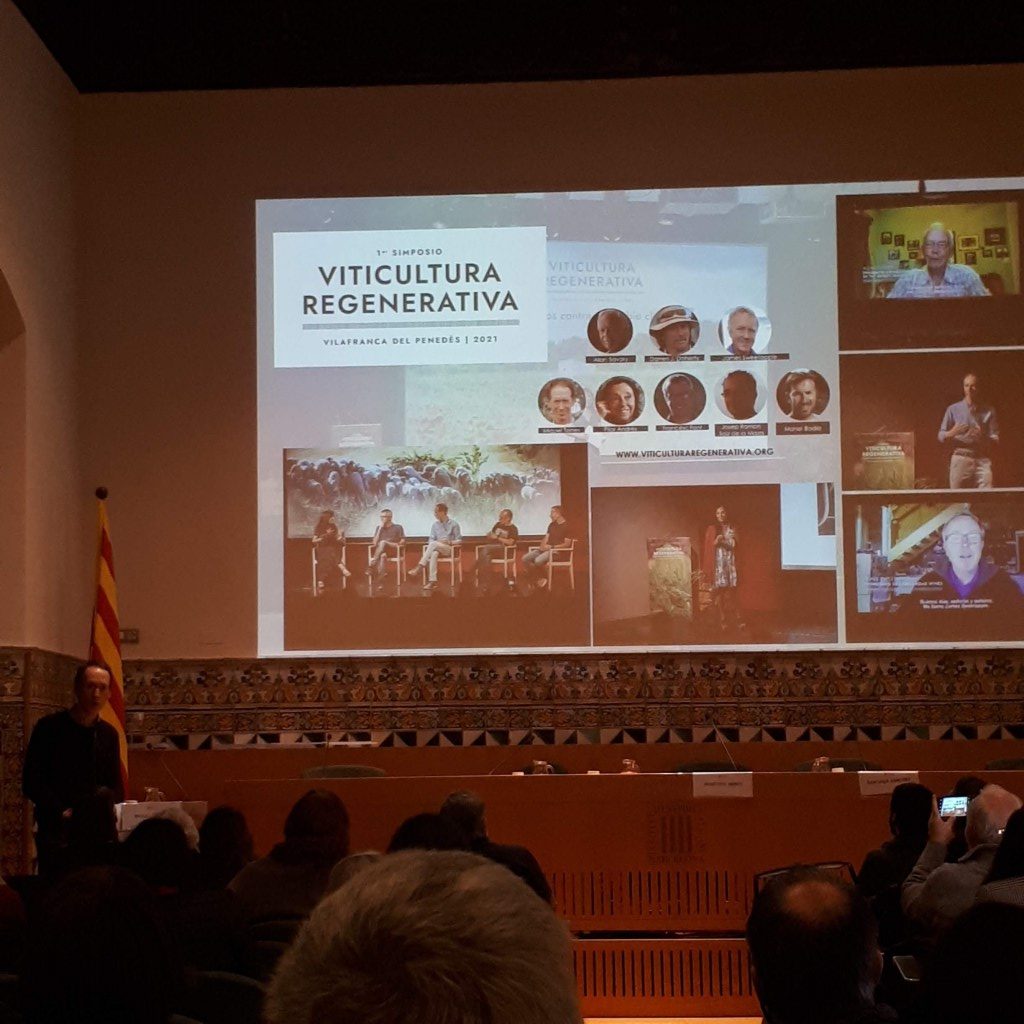
We also saw the commitment of the Torres wineries —which manage hundreds of hectares—to regenerative viticulture (having even co-founded a foundation for this purpose) that prevents soil loss and increases CO2 absorption, although in this case we felt there was a lack of discussion regarding whether it is necessary to continue using so much land for a single product that is not a basic necessity.
We witnessed some comments from the audience that seemed intended to detract rather than contribute. Focusing on details such as whether or not (small) machinery is used or whether the natural shape of the vine is respected—in short, we believe that within a broader framework of reflection on agri-food systems and their undeniable influence on our health and that of our landscapes—and within a framework of constructive dialogue aimed at finding more and better solutions—we must, across all sectors, focus our attention on what builds rather than what destroys.
No project is perfect, and neither are the processes.
A productive business venture is also a living system that will undoubtedly go through various transitional phases before reaching maturity, and like any ecosystem, it will reach its peak—and this will happen… well, when the optimal conditions are in place, neither sooner nor later.
To demand that all pioneering projects in landscape production and management be perfect, absolutely coherent, and seamless from day one… is a requirement that prevents progress and stifles the free development of each project’s evolutionary mechanisms. These mechanisms, which trigger self-regulation through feedback loops—whether positive or negative—guide projects to where they need to go based on their specific contexts.
Just as we marvel at the growth of a creature—human or otherwise—with its stumbles, its attempts to make progress, its ways of asserting itself, and above all, its great achievements… …so we should adopt a similarly empathetic and supportive perspective toward all those projects that are growing in environments that are sometimes hostile (in terms of legal, economic, resource, marketing, or negative press challenges, etc.).
We cannot ignore that horizontal hostility within the very circles in which we move. Nor can we ignore vertical hostility, which is generally directed from the top down.
It is absolutely essential that the people who make laws, create inspection protocols, and determine what can and cannot be produced take the time to travel extensively throughout the country, to experience the diverse rural realities that make up the productive fabric, and, above all, to analyze the effects that conventional agriculture is having on our soils, on our food, on our economy, and on our water. No political party should continue to support this degradation of our resources.
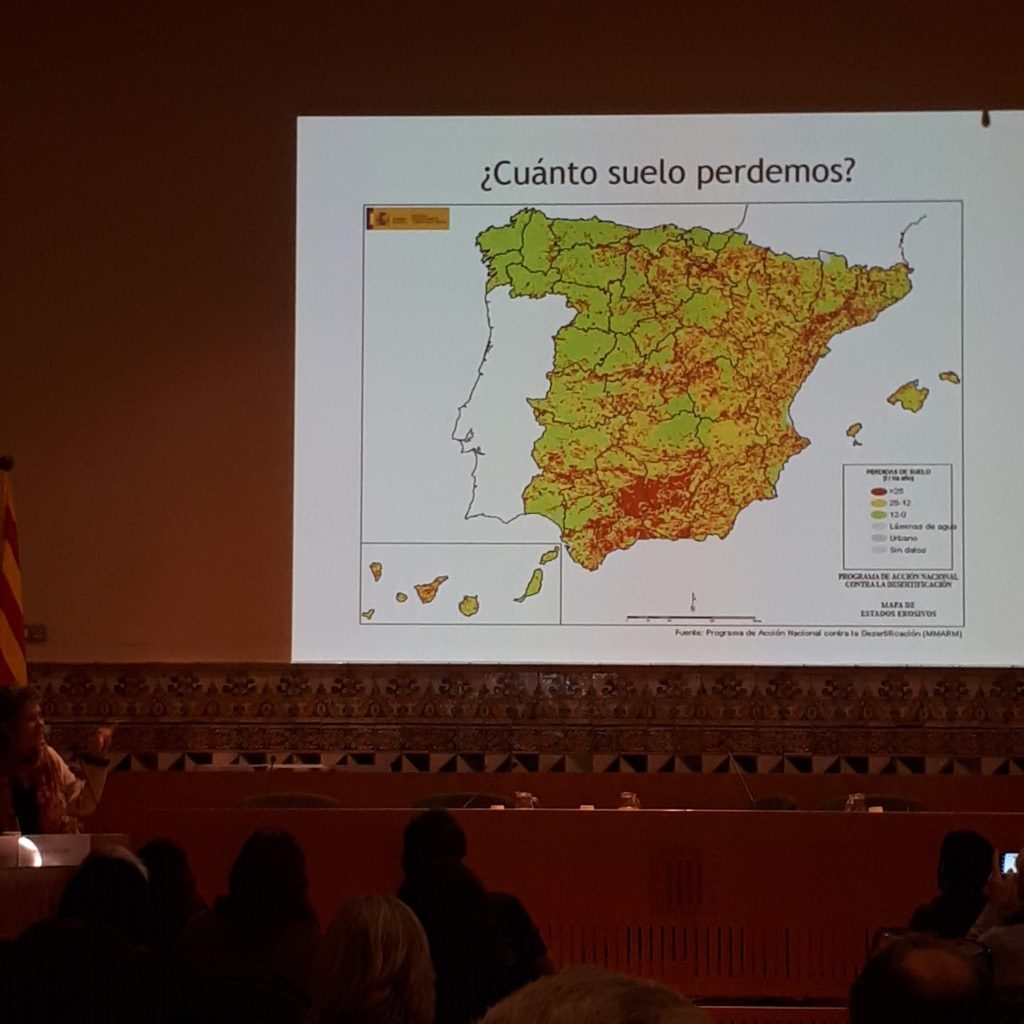
We have entered the most critical decade for adapting to the food, energy, and climate crises of the next 30 years. Support for small-scale producers to sustain this transition phase may be necessary—not only from the top, through government agencies, but also from the bottom up, through our daily food consumption. “Less, but of higher quality” is a good motto, in our opinion.
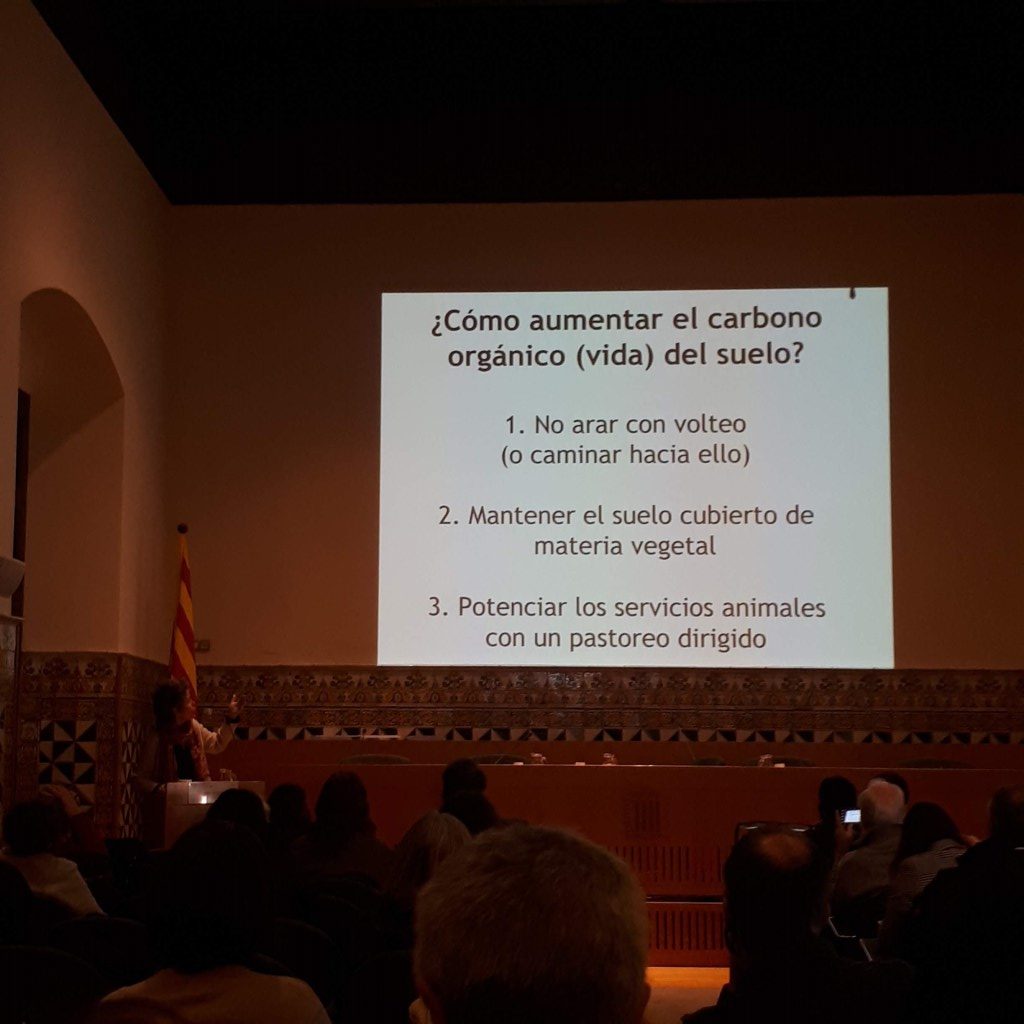
Many practices in regenerative agriculture work at all scales. Is it possible to sequester tons of CO2 while growing high-quality food and generating positive socioeconomic impacts?
Can we build a regenerative culture that stops simply sustaining the status quo and instead creates something new?
Yes, of course we can do it—there are hundreds of thousands of people all over the world already doing it.
Will you join us? La Casa Integral is here to support you.