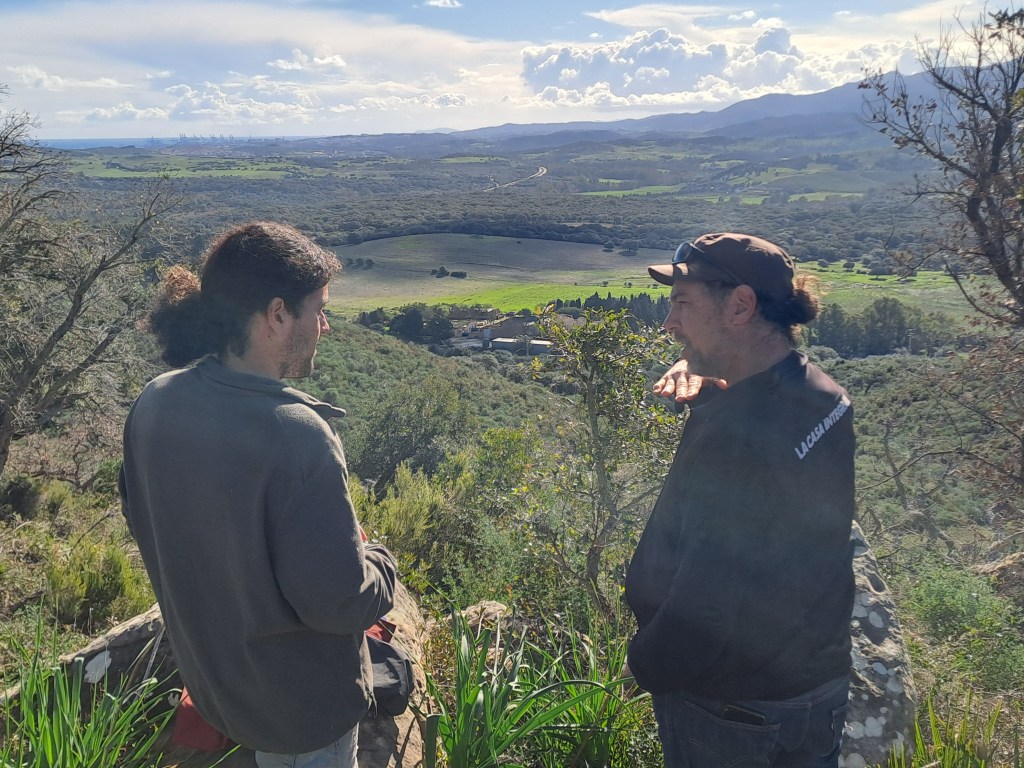
Cortijo Las Majadillas, a farm with a regenerative vision
600 hectares.
A farmhouse.
Hundreds of cork oak trees.
60 cows of various breeds.
5 horses.
2 streams, 1 river, 2 springs.
One small reservoir and one larger one.
About 1,000 mm of annual rainfall.
Several geological faults.
Three generations of livestock management.
Constant hunting activity.
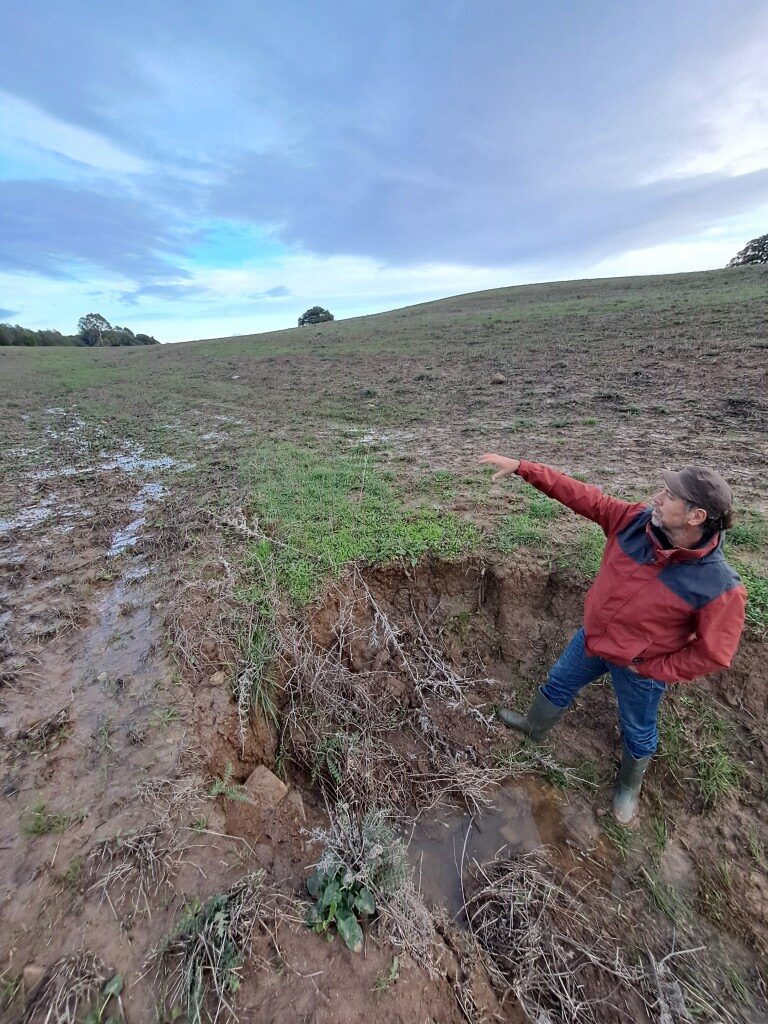
Gully erosion, waterlogged areas, and parched areas.
Livestock mortality due to drought.
Insufficient pasture and the need to supplement livestock feed.
We could just stick to the list. But it’s not the numbers alone—nor the isolated elements of the system—that allow us to understand what’s happening on a farm or where it might be headed.
Context is everything. And this is what we look at during an in-person “hydrological consultation.”
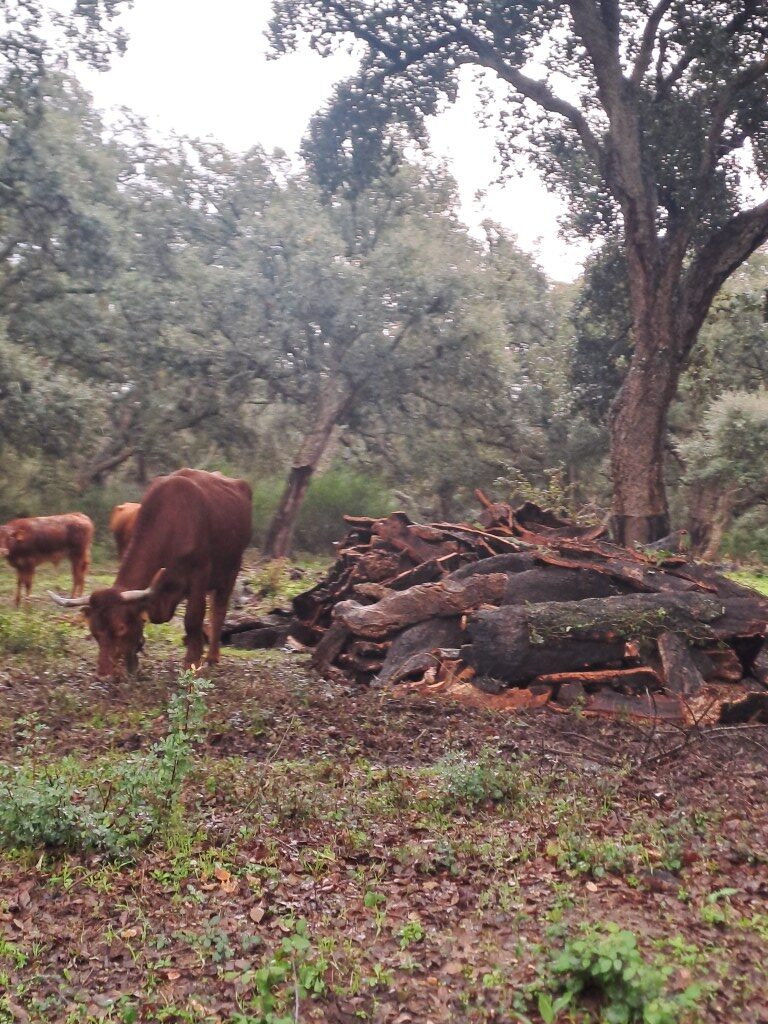
The interactions between elements, the relationships between data, and a deep understanding of where we’ve come from, where we are now, and where we want to go form the foundation of any Regenerative Strategic Design.
Two Days of Regenerative Hydrological Consulting
We spent two days at the Las Majadillas estate in Cádiz conducting a Regenerative Water Consultation. And the land decided to show us, unfiltered, its wettest side.
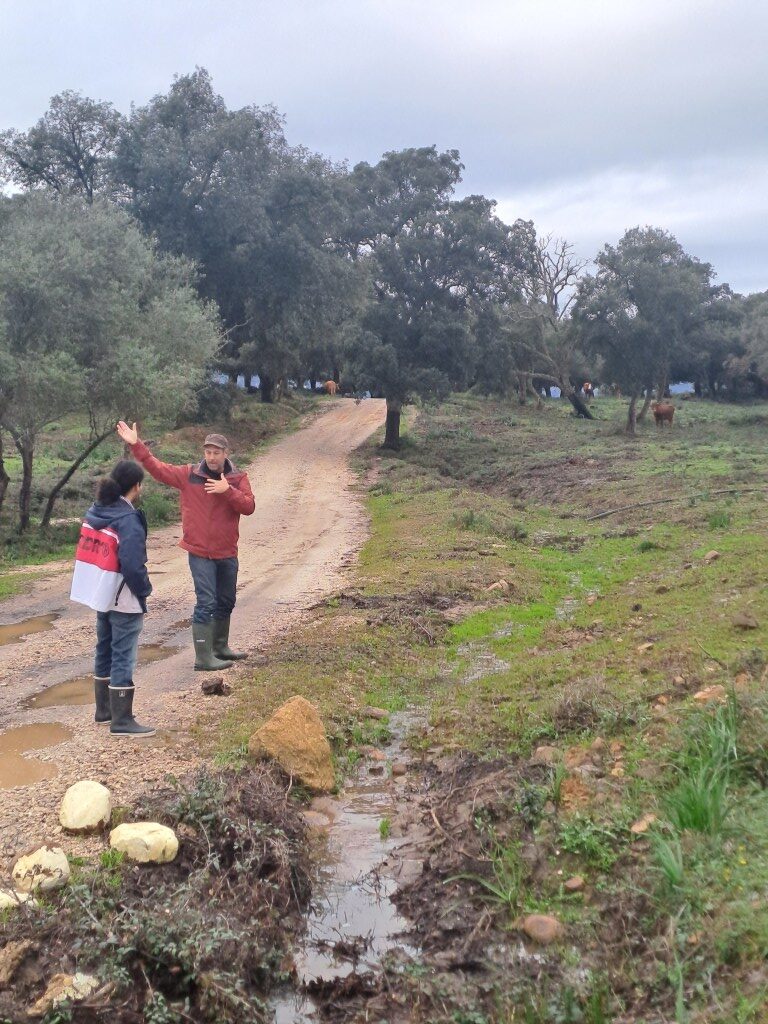
The heavy rains literally forced us to buy high rubber boots so we could explore the farm. Mud, puddles, active runoff, and saturated soil gave us an exceptional opportunity: to observe the system at one of its most critical and revealing moments.
Start by listening to the land… and to those who live there
The first phase of the project always involves conducting an in-depth interview with the property owners. We need to build a solid baseline that incorporates the property’s history, past decisions, current uses, and future aspirations.
The Regrarians© checklist provides a clear framework to ensure that no loose ends are left untied and, at the same time, gives property owners an opportunity to see their property with fresh eyes.
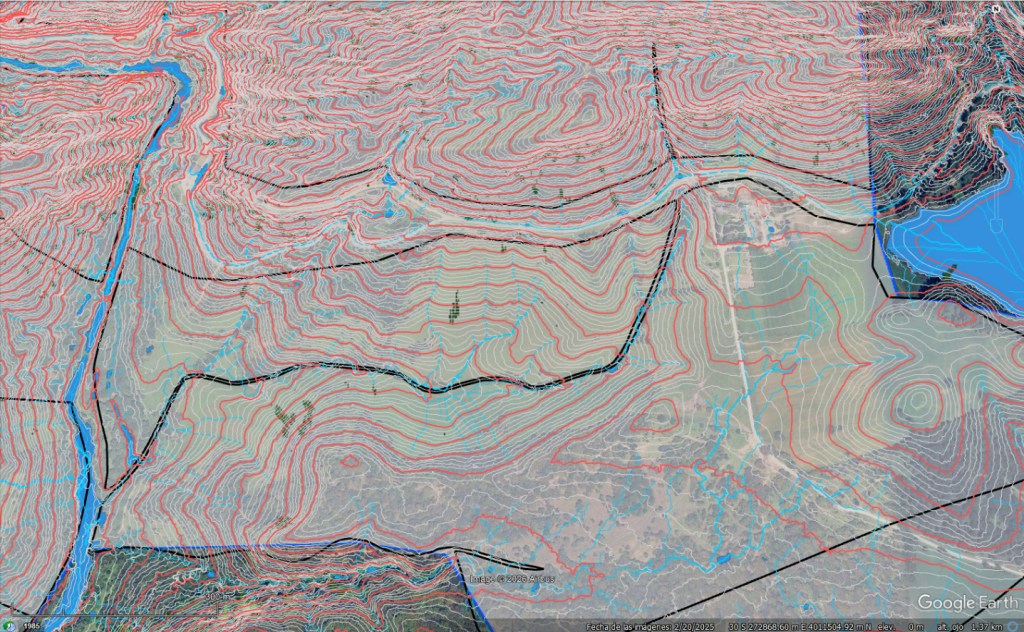
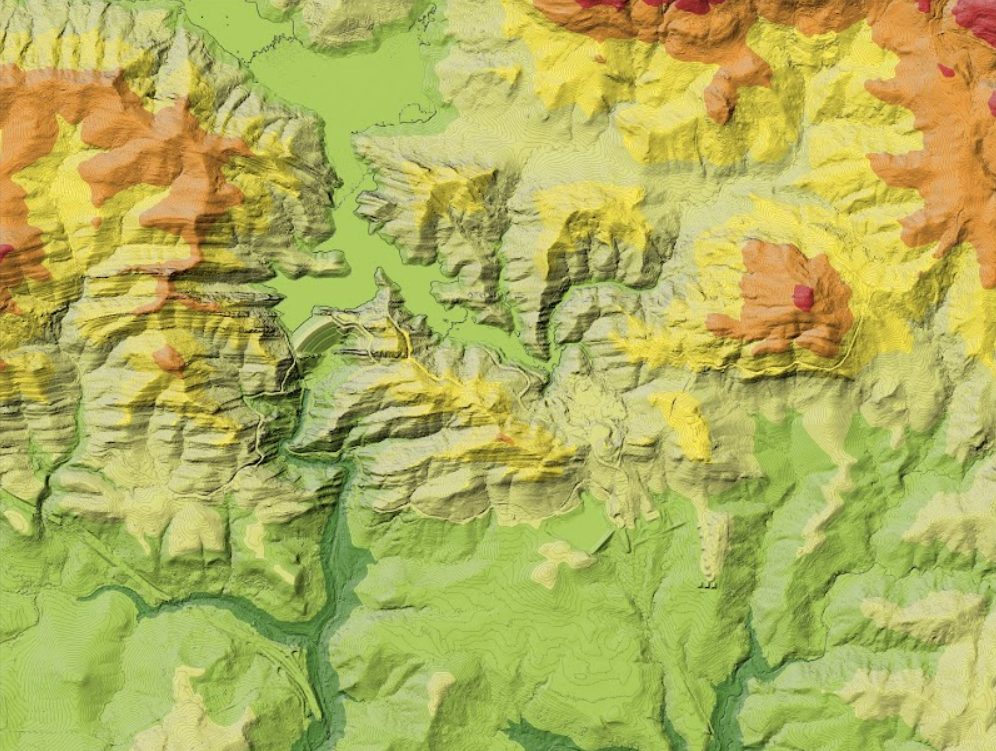
Before heading out into the field, we reviewed all the available maps with Félix, including the hydrological layers created by Georgi Pavlov (Regrarians©). On a 600-hectare farm, carefully planning the route is no small matter; it helps us make efficient use of both the consulting firm’s and the client’s time, creating a satisfying experience for both parties. A hydrological consultation may begin on the map, but it is confirmed in the field.
Two Frameworks for Our Hydrological Consulting Services
For hydrological consulting and landscape design, we use two main frameworks:
1. The Yeomans Permanence Scale, as adapted by Regrarians©, which helps us rank decisions from the most permanent to the most flexible, thereby identifying priorities.
2. Our proprietary “4×4” methodology, which focuses specifically on the Water layer and is connected to the rest of the system.
In this methodology, we first analyze the watershed pattern using four key functions:
- Recruitment
- Driving
- Storage
- Distribution
During an on-site hydrological assessment, we identify which elements are missing, which are present in excess, and, above all, what their quality is like. For example, an excess of water channels often indicates active erosion, loss of fertile soil, landscape dehydration, and nutrient leaching. In our article on Hydrological Design, we discuss this in a bit more detail.
Once we have understood this first level, we apply the analysis to the four areas of action:
- Surveying (Earthworks)
- Bodies of water
- Vegetation
- Soil
Complexity, patience, and a strategic perspective
Las Majadillas presents an unusual level of complexity. Many different situations coexist within the same territory, making it difficult to identify clear strategies at first glance.
Félix’s patience, knowledge, and good humor were key here as he answered our endless questions. Such a rich and exceptional landscape can be confusing if not analyzed rigorously.
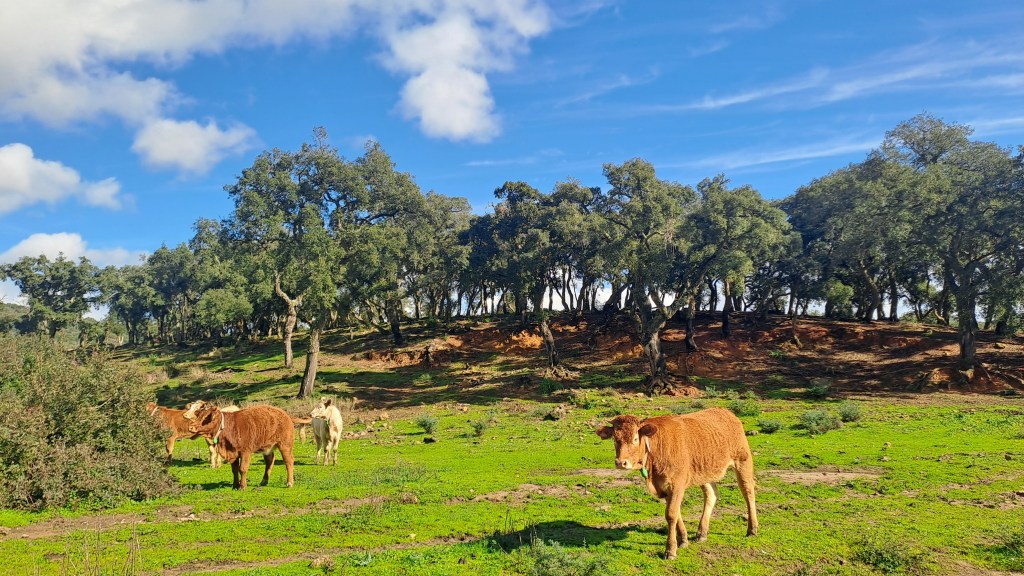
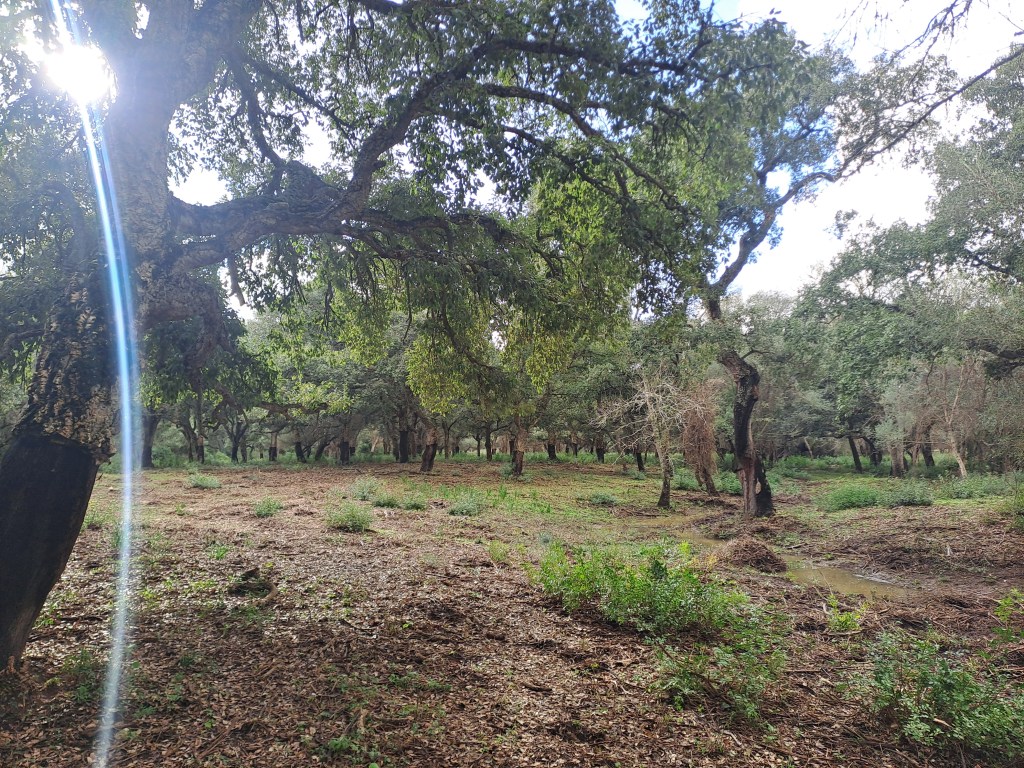
This is an estate that “has it all”: a setting of great beauty, wildlife, rivers and streams, the last “Mediterranean forest,” griffon vultures, centuries-old cork oaks, Retinta horses and cows, Limousin, and Angus cattle in a vibrant mosaic of pastureland.
Reorganize to Regenerate
In this case, the key isn’t to add more, but to reorganize things better.
For the landscape to evolve into a healthier and more productive pasture, it will be necessary to:
- Reduce the density of Quercus in some areas and increase it in others.
- Improve the root function of vegetation adapted to the local environment.
The situation changed significantly a few decades ago with the construction of two nearby reservoirs . This has affected the microclimate, and it is very likely that the vegetation is still adapting to this new water balance.
The Central Role of Livestock Management
To improve pastures, protect young cork oak seedlings, and maintain soil health, it will be necessary to:
- Keep livestock out of certain areas at specific times.
- Focus on other areas and other times.
Livestock management is a decisive factor. When well-designed, it can become a powerful regenerative tool. When mismanaged, it accelerates degradation. Soil is the largest reservoir at our disposal; every 1% of organic carbon in the soil can store up to 200,000 liters per hectare! More information on the soil-water nexus can be found on this page of the Agricultura Regenerativa Ibérica website.
Animals, grass, and forests can not only coexist— they can also enhance one another through a living soil. Holistic management, or rotational grazing, is the key here.
Agroforestry, Water, and Biodiversity
During the visit, we reviewed several agroforestry proposals that would make it possible to:
- Diversify production.
- Increase the amount of tree forage by late summer.
- Protect pastures from extreme heat.
- Support a new approach to livestock management.
We also identified key locations for:
- Create small retention ponds to slow the flow of water and trap sediment.
- Design small and medium-sized water reservoirs or biodiversity ponds.
Interconnected ponds are highly desirable on many farms, but their impact must be carefully assessed. Water alters the microclimate and can create humidity levels that some species—which have adapted over centuries to different conditions—cannot tolerate.
For this reason, every hydrological design must be accompanied by an appropriate landscaping plan, recognizing that any adjustment—no matter how small—affects the entire system.
Hydrological consulting, then, goes far beyond simply designing ponds.
The geological layer matters, too in a hydrological consulting project
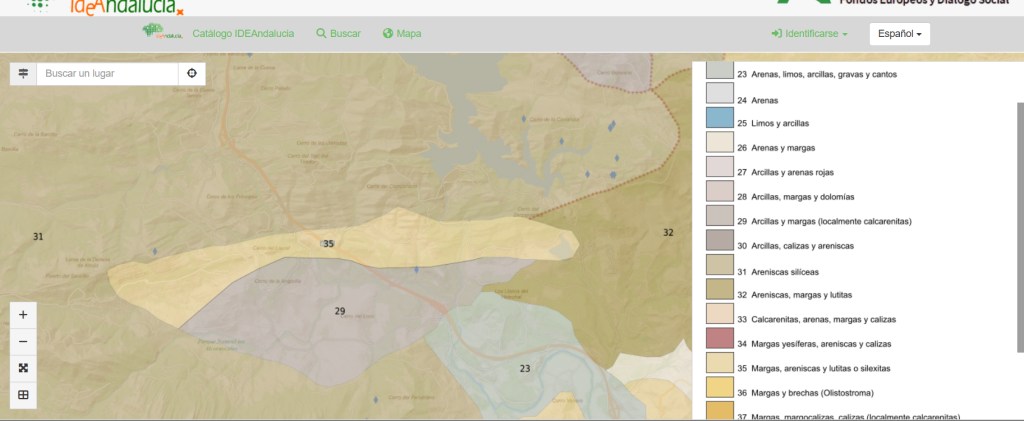
Another fundamental layer is geology. Today, we have digital maps that allow us to identify faults, expansive clays, and other key elements for understanding the site’s hydrogeology.
Las Majadillas is no exception. Understanding its geological foundation is essential for safe and consistent design, although “the map is not the territory,” and field observations are indispensable for confirming (or refuting) what is shown on the maps.
A Landscape with a Future
Las Majadillas has the potential to become a model farm: producing high-quality food and products while increasing biodiversity, sequestering carbon, building soil, and caring for the people who live there.
Our work can be “tough” at times. But it’s always deeply rewarding: because of the landscapes we travel through, the people we meet, and the future that, step by step, we help rebuild.
To spend a few days at Cortijo Las Majadillas (sleeps up to 18): Facebook or felixsm91@gmail.com